Have you noticed, the political press/media/punditry is suddenly awake to the real chance there will be a multi-ballot contested Democratic National Convention?
They have begun to look at the math, the delegate math as the question is asked if a candidate who arrives at the convention with a plurality but not a majority of delegates should he be afforded presumption and pushed over to a majority that gains the Democratic presidential nomination?
Bernie Sanders says yes, all the other candidates say no. No wonder in that, as he is likely to have the highest delegate count when they all get to Milwaukee in July.
Watching this unfold, many pundits and analysts are comparing the present Democratic multi-candidate field and contest with the 2016 Republican multi-candidate field and contest –comparing the effort by regular Republicans to stop Donald Trump’s nomination to an awakening among regular Democrats to the front leading position of Sanders this year.
Is the comparison apt?
No.
Why not?
Because most Republican presidential primaries are either winner take all affairs or a hybrid combining proportional delegate allocation with winner-take-all voting with the differentiation in rules being between district and statewide delegate selection, whereas Democrats have a uniform 15% proportionality rule for all delegations across three categories of pledged delegates.
Quick Convention Review:
57 Delegations: 50 states, Washington, D.C., Puerto Rico, U.S. Virgin Islands, Guam, American Samoa, Northern Marianas, Trust, Democrats Abroad.
3,979 1st ballot pledged delegates elected in primaries and caucuses including from districts, general state at-large and state at-large PLEO (Public Leaders and Elected Officials) delegates.
Number to win on 1st ballot: 1,991.
771 Super Delegates includes all members of the Democratic National Committee, all Democratic governors, all Democratic members of the U.S. House and Senate, all former Democratic presidents, other supernumeraries.
Duration of pledges of elected delegates? 1st ballot only, all delegates unbound thereafter.
Super Delegates enter voting on the 2nd ballot (but they will be endorsing candidates — about one third have already — and attempting to persuade pledged delegates throughout).
As of Feb. 28, according to Wikipedia, 166 supers have endorsed a candidate still in the race; 47 supers previously endorsed former candidates like Corey Booker and Kamala Harris and presumptively are back in play – while the remaining 558 remain undeclared. Joe Biden leads still active candidates with 73 super delegates so far while his nearest competitors for supers are Michael Bloomberg and Sanders, each with 23 as of today.
Total delegates eligible to vote on 2nd and subsequent ballots: 4,750.
Number to win on 2nd or subsequent ballots: 2,376
Will anyone get to the convention with 1,991 1st ballot delegates?
No.
How does anyone know that, how can anyone know that? Because it is already an entirely reasonable deduction even from the sparse results to the moment, from the indicated outcome in South Carolina, from the polls, and from the calendar: Especially from the calendar which has 40% of all pledged delegates decided by next Wednesday, March 4; 60% by St. Patrick’s Day March 17 and nearly 70% by April 2.
How many candidates could be viable on the 1st ballot and then on subsequent ballots if the 1st ballot does not produce a nominee? At least three, possibly five, very likely four.
What number of delegates will someone need to arrive at the convention with to gain enough momentum to become so inevitable as to carry the 1st delegation roll-call if other candidates withdraw and release their delegates?
A fair guess is a minimum — a minimum — of 1,700 (85%).
What is a fair guess as to the maximum number of 1st ballot delegates any candidate will bring to the convention?
Somewhere between 1,450 (73%) and 1,600 (80%) — but probably toward the lower end of that range.
How does anyone know any of this for certain? They don’t, no one does. But if at least four or five candidates stay in the contest after Super Tuesday next week then you can surmise they are increasingly certain this is where the convention is headed.
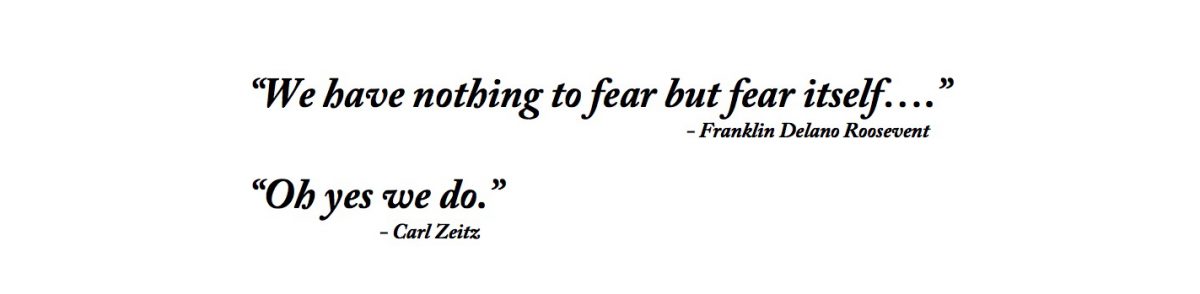
In 1932, when Democratic Party rules required two-thirds of delegates to win, the convention chose its winner on the 4th ballot. His name was Franklin Delano Roosevelt. In 1860 when the Republican Party convention needed a majority to nominate a presidential candidate the convention did so on the 4th ballot. The winner on that 4th ballot? Abraham Lincoln.
In fact, it took a lot of wheeling and dealing as they say, by their partisans at those conventions to secure the nominations of our two greatest presidents.
Then, should a plurality be enough to lock down the nomination? No. The Democratic Party rules say the winner has to get to 50% plus one delegate to win.
That is the rule.
How did Lincoln deal with those who lost to him at the convention, how did he keep them and their supporters in the fold? He made overtures that resulted in four of them becoming members of his cabinet including William Seward, his strongest convention opponent, who in fact led on the first two ballots. Secretary of State Seward became his most diligent, loyal cabinet member.
FDR chose one of his foremost competitors, House Speaker John Nance Garner of Texas to be his vice president, as a demarche with the Jim Crow south. Nance, of course, is said to have said the vice presidency is “not worth a bucket of warm spit”. But he took it as a consolation prize to help unify his party anyway.
Then too, twice in this still young century, Republicans have been elected president with a plurality of the popular vote though losing it in both instances to a Democrat.
Democrats know very well the difference between plurality and majority.
There is inarguable certainty in a majority that is lacking in plurality.
Someone will get to 1,991 delegates in July in Milwaukee on whatever ballot that occurs and, until it does, best not to count anyone out of the race who chooses to stay in it or to declare anyone inevitable. It will be a while yet.
 Peeling the Onion