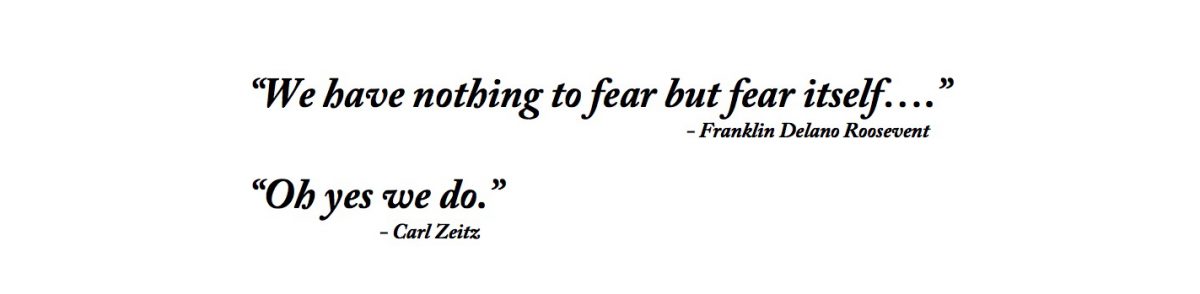
On July 2 1932 Chicago, Franklin Delano Roosevelt became the first nominee of a major party to accept in-person a major party nomination for president.
With Louis Howe, Missy LeHand, and others in his close circle of staff and family, FDR traveled by air through awful weather that tossed their plane to and fro and up and down to reach Chicago.
Arriving, he went directly to Chicago Stadium to deliver his acceptance.
In his resonant, confident voice FDR told a nation brought to its knees by the Great Depression, and in despair of finding its way out, he would lead the way.
At the very end of his address, he declared to the assembled convention and to an America of 120 million people listening in by radio:
“I pledge to you, I pledge myself to a new deal for the Amerian people.”
It is a lasting and memorable note in the speech, one that echoes and reverberates in American history and reaches through history in the laws and programs he enacted that still shape our lives, like Social Security.
At that moment, in that single sentence, FDR gave a name to his program to bring America back from the depths of the depression – to restore hope and confidence. The New Deal did what FDR summed up later in a Fireside Chat as his method of governing.
“It is common sense,” said FDR “to take a method and try it. If it fails, admit it frankly and try another. But above all, try something.”
FDR pledged a New Deal and through it delivered Social Security, the Securities and Exchange Commission, the National Labor Relations Act, the Agricultural Adjustment Act, the Tennessee Valley Authority, the Columbia River Project, and, much, much more including later, the GI Bill.
In that spirit, Harry Truman pledged himself to a “Fair Deal,” which included the still elusive national wish for a program of national health insurance.
Truman had to settle for less in those archly. reactionary times but he got a Fair Housing Act, implemented FDR’s GI Bill, broke into the vaults of segregation with a law that prohibited racial discrimination in interstate travel, and with lasting integration of the nation’s armed forces.
Nearly 30 years after FDR first accepted his nomination to be president, John F. Kennedy did the same in Los Angeles in an address in which he spoke of a “New Frontier”. He died before crossing it but he launched the American moon shot program, created the Peace Corps and forcefully furthered the progress of higher education integration in the south.
In 1964, his election year, Lyndon Baines traveled to Ohio where during a speech he told his audience, “And with your courage and with your compassion and your desire, we will build a Great Society. It is a society where no child will go unfed, and no youngster will go unschooled.”
His Great Society gave the nation the 1964 Civil Rights Act, the 1965 Voting Rights Act, the 1965 immigration reform act that opened the nation’s borders to the diverse America we see today — that gave Kamala Harris’s parents, one a Jamaican, the other from the subcontinent of India, entry to the United States.
The Great Society created Medicare, gave us WIC and Medicaid, Title 1 and Title 9 in its vast reform of the role of the federal government in public education, including public broadcasting and the National Endowments for the Arts and for the Humanities.
Bill Clinton and Barack Obama did not name their administrations but expressed their optimism in slogans — Clinton’s Up with People and Obama’s “Yes we can”.
They continued the advance of social and economic fairness and progress from the New Deal to the Fair Deal across that New Frontier to the Great Society: Clinton with the Children’s Health Insurance Program; Obama with an economic recovery act that brought the nation back from a fiscal and financial crisis and — above all — enacted the Affordable Care Act, aka Obamacare, a landmark in the century-long battle to create health coverage and care for all Americans.
Why is that a century-long effort? Because the first president to suggest instituting a system of national health care was? Was TR, Republican Teddy Roosevelt.
And that brings us to the here and now of the fateful 2020 presidential election.
Introducing Kamala Harris as his running mate this week, Joe Biden called for a “Fair Shot” for all Americans.
He thereby may have named the purpose and program of the administration he would lead if elected.
Because if he takes the reins of government next January, Biden’s Fair Shot administration will have more to do than any since 1933, when FDR brought the New Deal with him to Washington and America.
 Peeling the Onion