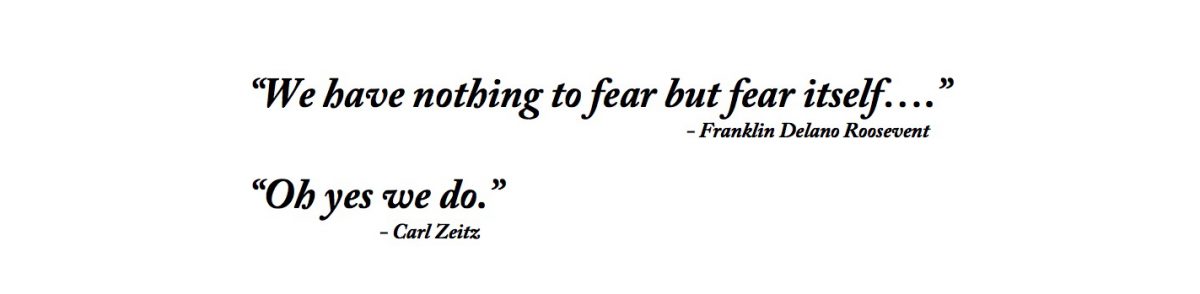
It’s uncertain, unlikely even that having a hot dog at a July 4 picnic unites this country anymore.
You know there is the mustard v. ketchup issue. Everything is an issue.
So when President Biden speaks to national unity and its expression in Congress through bipartisanship, we hold our breath and wait to see what can happen, what will happen – with small expectations.
In the largest sense, the president is speaking to the American spirit, seeking to breath life into the notion that we are one people for all of whom unity is an over-arching purpose that brings us together in times of great national stress. But we know that never lasts. Americans are a contentious people.
George Washington detested what he called “faction” and hoped to serve as president over the very first constitutional administration with unified purpose and agreement. Then Mr. Hamilton met Mr. Jefferson and almost instantly there were two factions – two factions from which through the twists and turns of 240 years we evolved into Democrats and Republicans. Yes, politics is Darwinian, the survival of the fittest, not necessarily the best.
On taking office, the first Republican president confronted secession by seven states. Immediately after his inauguration four more states seceded as civil war divided the United States deeply enough that the ensuing conflict claimed the lives of 600,000 men, fully 2 percent of the population.
Thankfully, though some days it feels otherwise, however bad our differences are today we are not on the verge of killing 6.6 million of one another (330 million x 2% if you are slow on the uptake).
What is the exact issue today? The issue today is everything. There is no common agreement about anything in Congress except perhaps to appropriate vast sums of money for the Department of Defense.
President Lincoln governed and led a nation of 30 million, in which 6 million whites in 11 states broke from the nation, forcefully taking with them 4 million Black people held in bondage by a relative few among those whites.
Today President Biden governs in a politically broken nation of 330 million in which the divisions seem as bleak, real and more widespead than in 1861 except they are without the neat geographic boundaries of 11 contiguous, secessionist states.
Yet it is his obligation after the angry, shrill cacaphony of madness, discord, deceit, anger – all of it — that constituted the national government the past four years, to make unity his message and to effort it with an able, competent, working White House and national administration.
Nowhere is this divide more starkly on display than in the U.S. House of Representatives and the U.S. Senate where, wistfull back glances notwithstanding, there is not and has been no dependable bipartisanship except on war resolutions and military expenditures for more than 30 years.
It is now entirely likely that President Biden’s first and most pressing major legislative initiative, the $1.9 trillion panedmic recovery bill, can pass only through budget reconciliation. That is a necessity in the Senate because it is the only means to shortcircuit the chamber’s 60-vote cloture rule to bring legislation to a vote.
If you can’t vote on a bill, you can’t pass it no matter if the polls say 70 percent of the people want it passed as they do for the recovery plan.
Reconcilitation allows budget and tax legislation to be passed with 51 votes in the Senate rather than having to obtain the 60-votes needed for cloture.
Cloture is an inside-baseball intimidating word for a Senate practice that simply means closing debate and getting down to the business of taking a vote by shutting off a filibuster or merely the threat of one.
The Constitution of the United States says nothing whatsoever about a 60-vote majority to pass laws. It is entirely specific when it demands greater than a simple majority.
It requires two-thirds of the Senate to convict on impeachment – witness the majority vote in the Senate just days ago to impeach that fell far short of two-thirds or even of 60 yes votes.
Likewise the Constitution requires two-thirds of both houses to over-ride a presidential veto, requires at least two-thirds approval by the Senate to ratify foreign treaties and, indeed, required ratification by nine of the 13 founding states to take effect in the first place.
So, it is exact and specific as to when more than a simple majority is required in either house or in both. Clearly, with no doubt whatseover, by setting down these distinctions the drafters made it abundantly clear that a simple majority of 50 percent plus one otherwise was and remains intended to enact a law.
The document and the men who wrote it intended the nation’s laws to be approved by a simple majority- 50 percent plus one, a neat 51 in a 100-member Senate, achieved in a 50-50 Senate by the vice president’s constitutionally authorized 101st vote.
How then did we get to a 60-vote supermajority requirement to pass a law in the Senate? The explanation is a long twisting course derived from another constitutional provision, the one that makes each house of Congress responsible for devising its own rules.
Cloture is a rule of the Senate, not a statement of, much less an intention of the Constitution or its drafters. It is nowhere in the Constitution. It is in the rules of the Senate.
Therefore, the very fact that the Senate made and still makes this super-majority a distinct requirement by its own rules underscores that the Constitution had no expectation except a fundamental democratic expectation of a simple majority in lawmaking.
Cloture changes majority governing to minority dictate in the U.S. Senate.
Technically, cloture closes down a filibuster or threat one, the practice of talking to death of a bill. In practice it gives a 41-vote minority control of the Seante. It goes as far back in the annals of Congress to 1806 with historical record of it through the 19th Century when it was rarely invoked.
In modern form it came into being in 1917 in the Senate at the behest of President Woodrow Wilson, who wanted the Senate to shut down debate concerning presidential authority to take action short of war in the face of German attacks on neutral American shipping (as an historian, Wilson had been an early, forcefull advocate of superceding power by the executive).
In response the Senate created the cloture rule with requirement for two-thirds of the Senate to shut off debate.
It got its first real use in 1919 when it was used to stop debate on the Treaty of Versailles that formally ended WWI of which Wilson was one of the four principal drafters. The treaty then went down to defeat as the rule came back to bite Wilson, who lost his cherished dream of U.S. participation and leadership in the League of Nations.
Cloture became the tool of the Dixiecrat south as southern Democratic senators used it to stop any and every bill they did not like, principally any bill having to do with creating or extending civil and voting rights.
Southern Democrats, for example, used it for decades to stop anti-lynching bills, from after 1900, and used their ability to band together this way as a tool in negotiating all legislation. (The U.S. Congress again failed to pass an anti-lynching bill in 2020 because an objection by Sen. Rand Paul (R-Ky.) blocked a consensus voice vote and the measure was not put up for a roll-call vote in yet another Senate peculiarity).
The 1917 cloture rule required the votes of two-thirds of senators present to shut off debate except for votes on Senate rules. In 1949 a combination of southern Democrats and Republicans tightened the rule to extend the two-thirds requirement to apply also to amending the rules of the Senate.
In 1975 the rule was amended to reduce the cloture choke point from 66 votes to 60 votes, a move considered reform except that the change requires 60 percent of senators elected not merely those present in the chamber at any given time.
But senators are malleable creatures and even though their rules call for a 60-vote majority to cut off debate, their procedures are slinky enough that they can modify the rules procedurally. What does that mean? It means they can do what they want, what the controlling majority party wants.
Thus in 2013 the Senate under Democrats eliminated cloture on votes for all presidential nominations except Supreme Court appointments to unblock a wall of Republican opposition to nominations by President Obama. In 2017 the Republican Senate then eliminated it for Supreme Court confirmations to gain approval of former President Trump’s three high court nominees, none of whom would have obtained 60 votes.
As a general observation cloture historically has been harder to achieve than war resolutions and declarations of war. Those have always passed by lopsided majorities far exceeding two-thirds of each house.
Historically achieving cloture proved most difficult and still is in all legislation having to do with civil rights and voting rights. It stopped such legislation again and again as pro-rights lawakers failed to overcome the effective veto held by the confederate states and their allies.
In the 87th Congress elected in 1962 Democrats counted nearly 90 seats from the 11 states of the confederacy among their 258 House members while Republicans had but 153. Similarly, Democrats controlled the Senate 67-to-33 but depended on 20 of 21 southern Democrats for that majority (Texas then having the anamoly of liberal Democrat Ralph Yarborough and conservative Republican John Tower representing it in the Senate.)
When President Lyndon B. Johnson asked Congress to pass the landmark Civil Rights Act of 1964, he knew it needed a whole lot of Republian votes because he started out with more than a third of his party’s House and Senate members from the south opposed — opposed as Alabama Democrat George Wallace said of segregation, now and forever.
Johnson, a southerner, who when Senate majority leader in 1957 used cloture to all but eviscerate a toothless civil rights act passed that year, knew as president he needed at least 67 Senate votes to shut down debate and get the new, forceful civil rights law he wanted to a vote. But outside the 11 southern states, he could count on no more than 46 Democratic senators.
The final outcome of the vote on the Civil Rights Act of 1964 was 73 in favor against 27 opposed. The 73 votes for passage included 27 Republicans, without whose votes cloture could not have been invoked to get the bill to a vote.
The following year Johnson asked for the Voting Rights Act of 1965 after Bloody Sunday on the Edmund Pettus Bridge in Selma, Ala. shocked the nation’s conscience. Again, Johnson needed broad bipartisan support to overcome Dixie.
He got it once more from 30 Republicans as the measure passed 77-to-19 in the Senate (with 4 senators not voting).
Similarly and strikingly in 1965 when Johnson asked for the biggest change in American social/economic policy since the New Deal he again received some bipartisan support, not as much but some, to establish Medicare and Medicaid.
The final Senate vote to establish those programs was 70-to-24 with 13 of the Senate’s 32 Republicans joining 57 Democrats. Democrats did not need 13 Republican votes to pass the bill but they absolutely needed at least 10 of them for cloture.
Fast forward to 2009 and the Affordable Care Act – Obamacare. By now the Congress had gelled into the frozen hyper-partisan landscape we know with a party reversal in the south, where Republicans held most seats from Dixie because Johnson’s civil and voting rights laws caused tens of millions of white southerners to abandon the Democratic Party and become Republicans.
Coming off the 2008 election of President Obama and a major swing to their party including two independents who voted with them, Democrats had 58 Senate seats, Republicans held 39. One seat was vacant owing to an unsettled conest in Minnesota.
Democrats were two short of the 60 votes to overcome Republican opposition to bringing the ACA bill to a vote after it passed the House and went to the Senate. They could not get it to a vote.
The Minnestoa contest resolved in favor of Democrat Al Franken. When Republican Sen. Arlen Specter switched parties late in 2009, Democrats had the votes for cloture. The bill passed the upper house 60-to-39 in December 2009.
But that was not the end of it. The Senate Democrats had amended the House bill to satisfy objections from two of their more conservative members. That meant the bill had to go back to a House/Senate Conference to reconcile the two versions and create a compromise for final passage.
But fate intervened with the death of Sen. Edward Kennedy, D-Mass. and the unexpected loss of his seat to a Republican in a special election, setting Democrats back to 59 votes.
That meant either the House Democats would agree to final passage of the Senate version or it would fail because if a changed compromise version went back to the Senate, Democrats again were going to be one-vote short to get the bill to a vote.
Despite resistance, House Democrats adopted the Senate version without change and the ACA went to the president for his signature. The vote in both houses was entirely partisan. All those voting yes were Democrats. All those against were Republicans.
This is the reality that confronts President Biden, a man like Johnson, truly of the Senate but not from this iteration of it.
In this 50-50 Senate Democrats are 10 votes short of cloture. Even if they find a handful of Republicans to vote with them on the substance of legislation, they cannot get to 60 to reach such a vote.
The hard, hard truth is that the Democrats will either do away with cloture altogether procedurally or be unable to pass any legislation except fiscal measures through reconciliation.
The really hard choice is this: Everyone knows the political nostrum that says what goes around comes around. One day more likely than not, there will again be 51 senators or more from this hard-right Republican Party able to reverse anything Democrats now and more bipartisan Congresses in the past have accomplished.
But if Democrats do not take that chance, they and the president will most likely see their forward-looking legislative program on civil and voting rights, climate, infrastructure development, immigration and expansion of family income security crash and shatter on cloture’s rock.
Is it time to end the conceit of the Senate oligarchy and pass laws in this country by majority vote of our lawmakers even if we have to rely on common sense to keep them in the future?
Unequivocally, it is.
 Peeling the Onion