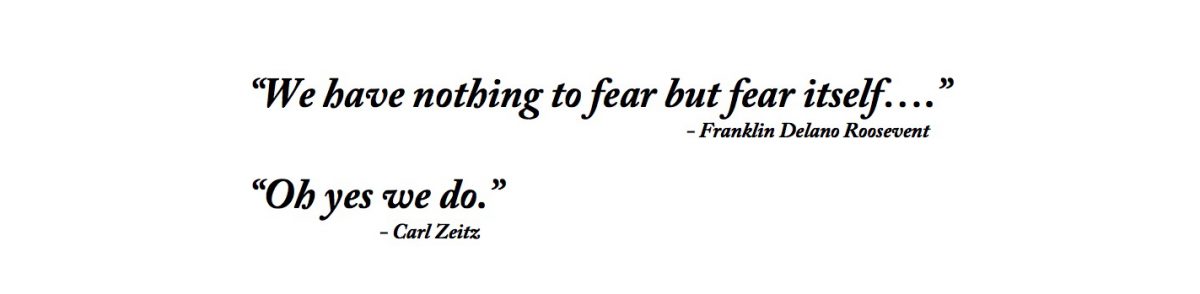
Let’s reduce this to plainest terms.
A man running for president says he will use the United States military to take Americans into custody for their speech and temerity to disagree with him, also to deport millions of people who are here illegally – by his own count in his own voice that’s up to 20 million people – though perhaps more accurately about 12 million.
His threats are broad, unencumbered by knowledge and unrestrained by law. They have to be taken at face value because he is one of only two people who will be elected the 47th president.
He may not know how to do what he is threatening but he knows dozens, probably hundreds of people around him like Stephen Miller – who says “America is for Americans only” – who plan to be with him in the White House and in his administration. They are making plans for him to act on the threats.
The core question goes beyond whether he would carry through or if civilians who would be with him at the White House, in the Department of Defense and the National Secuirity Council are prepared to set such orders in motion. There is considerable evidence he will and they will.
We know too from his conduct over nine hyperactive political years, including four as president – as well as testimony from those who served him during his White House years, and from those in the media and academia who parse everything he says – that he has but one North Star.
That is first, last, always, and only personal loyalty to him.
He is the only president in living or historical memory who did not attend the inauguration of his successor.
In a democracy such attendance is not simply the polite thing to do. It is an essential statement of common nationhood and citizenship shared by the parties, and between the winners and losers of an election.
Knowing all this, the overriding question is what the American military would do if he becomes president and orders it to to suppress, arrest and detain American citizens?
If he orders it to take into custody and deport without respect for existing law and the rule of law, millions of people deemed to be illegally present in the United States? If he orders those he would deport to be held in massive camps before deportation?
Never mind to where he thinks he can send millions of people, or how he would use the military to move them, or what that would cost, or how it would divert military and other resources to do it.
He is running for president and says as president he will order it. If we take presidential candidates at their word and we should, when he orders soldiers to do these things, will they? Must they?
United States soldiers have sworn an oath to support the United States Constitution.
They do not swear an oath to this man or that man (or woman). They do not take an oath to the nation. They take an oath to support the Constitution. So we are reminded frequently.
We are told this constructs a bullwark against illegal acts outside the pledges in the oaths.
Yes, oaths, because there are two of them – and they are different.
Let’s look at how U.S. military oaths evolved.
During the Revolutionary War, the Continental Congress established oaths for the enlisted men and officers of the Continental Army
The first oath, voted on 14 June 1775 as part of the Continental Congress law that established the Continental Army, said:
“I _____ have, this day, voluntarily enlisted myself, as a soldier, in the American continental army, for one year, unless sooner discharged: And I do bind myself to conform, in all instances, to such rules and regulations, as are, or shall be, established for the government of the said Army.”
This was replaced in September 1776 by this for enlisted ranks.
“I _____ swear (or affirm as the case may be) to be true to the United States of America, and to serve them honestly and faithfully against all their enemies opposers whatsoever; and to observe and obey the orders of the Continental Congress, and the orders of the Generals and officers set over me by them.”
And by this cumbersome oath taken by Continental Army officers:
“I _____, do acknowledge the Thirteen United States of America, namely, New Hampshire, Massachusetts Bay, Rhode Island, Connecticut, New York, New Jersey, Pennsylvania, Delaware, Maryland, Virginia, North Carolina, South Carolina, and Georgia, to be free, independent, and sovereign states, and declare, that the people thereof owe no allegiance or obedience to George the third, king of Great Britain; and I renounce, refuse and abjure any allegiance or obedience to him; and I do swear that I will, to the utmost of my power, support, maintain, and defend the said United States against the said king, George the third, and his heirs and successors, and his and their abettors, assistants and adherents; and will serve the said United States in the office of _____, which I now hold, and in any other office which I may hereafter hold by their appointment, or under their authority, with fidelity and honour, and according to the best of my skill and understanding. So help me God.”
Another revision followed in 1778 until in 1787 the new nation adopted and ratified the U.S. Constitution.
Article I, Section 8 of the Constitution lists among the duties of Congress “To make Rules for the government and Regulation of the land and naval Forces” of the United States.
Article II, Section 2 announces, “The President shall be Commander in Chief…”
Article VI requires all members of Congress, of state legislatures and all Unted States judicial and executive officers (including inherently all military officers) to take an oath to support the Constitution.
Thus in September 1789 the First Congress entacted by law the following oath for all serving the United States.
“I, _____ do solemnly swear or affirm (as the case may be) that I will support the Constitution of the United States.
A second part also said:
“I, ______ do solemnly swear or affirm (as the case may be) to bear true allegiance to the United States of America, and to serve them honestly and faithfully, against all their enemies or opposers whatsoever, and to observe and obey the orders of the President of the United States of America, and the orders of the officers appointed over me.”
Note the mandate for obedience to officers and to the president.
Over time the oath changed but not fundamentally until the Civil War resulted in this cumbersome declaration:
I, ______ do solemnly swear (or affirm) that I have never borne arms against the United States since I have been a citizen thereof; that I have voluntarily given no aid, countenance, counsel, or encouragement to persons engaged in armed hostility thereto; that I have neither sought nor accepted nor attempted to exercise the functions of any office whatsoever under any authority or pretended authority in hostility to the United States; that I have not yielded voluntary support to any pretended government, authority, power, or constitution within the United States, hostile or inimical thereto. And I do further swear (or affirm) that, to the best of my knowledge and ability, I will support and defend the Constitution of the United States against all enemies, foreign and domestic; that I will bear true faith and allegiance to the same; that I take this obligation freely, without any mental reservation or purpose of evasion; and that I will well and faithfully discharge the duties of the office on which I am about to enter, so help me God.”
Eventg in that greatest moment of national peril this was not an oath to the nation or to obey orders by the president or from officers . This oath is sworn solely to the Constitution.
In 1884 the following was adopted in place of the earlier oath.
“I, —— do solemnly swear (or affirm) that I will support and defend the Constitution of the United States against all enemies, foreign or domestic; that I will bear true faith and allegiance to the same; that I take this obligation freely, without any mental reservation or purpose of evasion; and that I will well and faithfully discharge the duties of the office on which I am about to enter. So help me God.”
Here, no mention of the nation or the president though his position as Commander in Chief is inherent in the Constitution.
This oath remained in effect through succeeding decades. It applied during the Spanish American War, WWI, and WWII. In 1959 the present officers oath came into effect.
In 1962 the enlisted man’s oath changed. It remains the same today.
But note that there were then as today, two separate, different oaths.
For officers it is an oath of office. For enlisted men it is an oath of enlistment.
Those taking the officers oath declare:
“I, _____ , having been appointed an officer in the Army of the United States, as indicated above in the grade of _____ do solemnly swear (or affirm) that I will support and defend the Constitution of the United States against all enemies, foreign and domestic, that I will bear true faith and allegiance to the same; that I take this obligation freely, without any mental reservation or purpose of evasion; and that I will well and faithfully discharge the duties of the office upon which I am about to enter…” optional is to end with “So help me God.”
Every time an officer is promoted to a higher rank, he or she must take this oath.
For those in the ranks there is a different oath taken upon enlistment:
I, (state your name), do solemnly swear (or affirm) that I will support and defend the Constitution of the United States against all enemies, foreign and domestic; that I will bear true faith and allegiance to the same; and that I will obey the orders of the President of the United States and the orders of the officers appointed over me, according to regulations and the Uniform Code of Military Justice.”(emphasis added). It is optional to conclude “So help me God.”
Inherent but unstated in the officers’ oath of service is loyal adherence to the office of the president in his capacity as Commander in Chief while the president is identified clearly in the lower ranks oath of enlistment as are lesser officers as persons to be obeyed, to whom obedience is sworn in the oath itself.
The oath of enlistment is to the Constitution. It is at the same time an oath to obey orders from, among others, the president. Linguistically, the pledge to obey the president is joined by the conjunction following the oath to the Constitution, but it is not made subordinate.
If every officer in the military were to disagree with a presidential order and so refuse to transmit it to the ranks, are enlisted men nontheless bound by oath to obey the highest commander, the president, no matter what? Hypothetically would his constitutional standing and prerogative as Commander in Chief mean his orders must be obeyed even if they were opposed by every other officer?
Is that definitively the morso now that the president operates under a supreme judicial finding of legal immunity for his actions as president? Does that mean if he gives an order there can be no dispute that it is presumptively lawful and must be carried out regardless? It certainly seems so, doesn’t it?
__________
Then let’s look at the evolution of another oath, the German military oath.
Why do that? Why is it at all relevant? It is relevant because the man has made it relevant, because we can hear a tape on which his former chief of staff, a four-star Marine general, tells us that his boss, the then president, said he admired the gererals who served Adolph Hitler – who obeyed Hitler.
It is relevant because the man we are talking about campaigns saying there is “poisoned blood” in America, chilling words identical to words by Hitler in “Mein Kampf.”
It is relevant because he tells followers America is betrayed by those who do not agree with them, as Hitler told Germans they had been betrayed by Jews and others he called “November criminals,” referring to the founders of the Weimar Republic.
It is relevant because he’s said if he loses, Jews will be to blame. That libel for one allegation of another is 2000 years old. It never goes away, does it?
It is relevant because he just held a campaign rally in Madison Square Garden, a location chosen not by coincidence but as a purposeful historical statement.
The Garden is a in different building at a different location now than it was on Feb. 20, 1939. But it is Madison Square Garden. In New York it is always the Garden.
On that date 85 years ago the American Nazi Party filled the Garden with 20,000 American Nazis raptourous to hear and rejoice together in a pledge to take over the U.S.A.
Look:

And look again:

Those photos were taken in New York City, not Berlin.
In Germany under the Kaiser the military swore an oath to him.
From 1919 to 1933 the German military oath was that of the Weimar Republic, which in theory if not in practice survived beyond Jan. 30, 1933 when Hitler became chancellor until the death of the last Weimar President, Field Marshall Paul Von Hindenberg on Aug. 2, 1934.
Then and only then did Hitler, the chancellor (head of government), declare himself both fuhrer (leader) of Germany as well as chancellor. Discarding the Weimar Constitution, from that day forward he held all power as fuhrer of the new Third Reich. But he did not order a different military oath to that effect. Someone else did.
The Weimar oath stated:
“I swear loyalty to the Reich’s constitution and pledge, that I as a courageous soldier always want to protect the German Reich and its legal institutions,
(and) be obedient to the Reich President and to my superiors.”
During the period just before and during the Hitler chancellorship under President Von Hindenberg the oath shifted slightly and subtley, reflecting the ascendance of the political far right, Nazis included, and now said:
“I swear by God this holy oath, that I want to ever loyally and sincerely serve my people and fatherland and be prepared as a brave and obedient soldier
to risk my life for this oath at any time.”
Then came a fatal mistake. General Werner von Blomberg, the War Minister, established a new oath. Later, to get him out of their way, the Nazis made a scandal of his marriage to a younger woman and used it in 1938 to force his resignation. He spent the war in oblivion, was tried as a war criminal afterward and died of natural causes in 1946 while an allied captive.
The new oath he instituted and adopted by the Army after Hitler had abandoned all constitutional pretense and made himself fuhrer declared:
“I swear by God this holy oath that I shall render unconditional obedience to the Leader of the German Reich and people, Adolf Hitler, supreme commander of the armed forces, and that as a brave soldier I shall at all times be prepared to give my life for this oath.”
Bloomberg said later that the new oath had been intended to bind Hitler closer to the nation’s military and away from the miliary wing of the Nazi party. He made a colossal mistake as he later acknowledged. It delivered the German army personally to Hitler and made it exclusively his instrument. It elevated Hitler’s title – Fsuhrer (Leader) -by oath.
This forever since is called the Hitler oath.
It is why the men – including numerous generals and the man at the center of the plot, Col. Klaus von Staufenberg, who conspired in the July 20, 1944 attempt to kill Hitler – believed that though they were doing the right thing for Germany, nonetheless they were traitors to their oaths.
The Hitler oath became the excuse for two generations of German soldiers. Loyal to their oaths, they said, they carried out orders. Those who gave the orders were to blame, they said, not them.
________
Then what is an oath about? Does the oath to the Constitution fence off what can be done under the document’s color? Does the enlistment oath create a duality by its obligation in the end to obey the president as well as support the Constitution?
If an enlisted soldiers’s oath ultimtely requires obedience to the orders of the president – as conveyed by his officers or, if they refuse to pass on such orders still nonetheless by the president – must soldiers ordered directly by the chief commander leaning on his constitutial authority – and now with court-awarded constitutional immunity – obey? Can a soldier say no? Complex paragraph, yes, but it’s a complex question.
If these seem to us Americans to be ridiculous, even foolish questions to which we know the answer is that still so in the face of promises to arrest some of us for our opinions or take millions into custody to deport them?
If we Americans did not create the political conditions that awaken these questions, questions about facism that were long settled by the Allied victory in Europe, this man has.
As shown he has made the mostly off limits analogy to Nazism and Hitler relevant. It is a hard, firm rule never to invoke this in our politics. But it is his actions, his language and his choice of venue for an openly racist and mysogynistic rally that has put all this at the center of the campaign and opens the question of obedience within the soldier oath.
If he returns to the White House, he will be surrounded by a phalanx of aides who have been examining these matters, who surely know how the German military surrendered to a single man.
Will they provide him within the context of the American oaths the basis to establish military control over Americans, especially armed with and by the Supreme Court’s acquiescence?
Would the military take such orders from the Commander in Chief when the former generals who worked for him and abjure such a system are not there any longer?
Are we about to find out what the oaths mean? What happens when Gen. Kelly is not there but Stephen Miller is?
If he is elected then yes – yes we are.
 Peeling the Onion