Carville and Me

I have never known James Carville to get it wrong.

He agrees with me. Trump will resign before the election.

Otherwise, James and I agree, Trump is headed for a landslide loss and, no, it is not too early to say that. It is already in the bag, in the clubhouse, in the ballot box.

Joe Biden need do nothing, which is nearly what he has been doing carefully and judiciously, and he will be elected decisively.

Trump is running against himself and the Coronavirus and he is losing decisively to both.

If Trump sees it through to Nov. 3, he will be at the losing end of a 58-41 election (with 1% for whatever kooks run otherwise).

If he resigned then, whoever Republicans cobble a presidential campaign around will be defeated even more decisively as will that entire political party outside the reddest states.

How would/will does that translate in the Senate? At least 54 seats, probably 55, potentially even 56.

In the House? Bolstering Nancy Pelosi’s 30-seat majority by 10 to 12 seats.

And, in State Houses? Democratic gains of three or four governors and a half-dozen more legislative chambers, setting up even deeper Republican losses in the 2022 mid-terms, like in Georgia and Florida and pushing redistricting decisively in Democratic Party direction.

Historically it will be the beginning of decades of a Republican Party in near-permanent minority, comparable to the Democratic Party’s situation after the Civil War with occasional wins of the White House – but never the Congress.

For all those years the Democratic Party in its deal with its devil, Dixie, almost never had a majority in the Congress until the 1932 election upended the seemingly permanent Republican majorities in the House and Senate.

Republicans in the past 50 years made an identical deal, with Republicrats in Dixie — the generational and political descendants and heirs of those Dixiecrats.

When you stand with and for Dixie, you are in the wrong and you will be in a permanent perverse minority. That is history’s lessons and now at long last, the piper must be paid and the payment looms as the future of the party of Lincoln (who, greatest man we ever saw in this nation, would not recognize it).

Trump has accelerated this inevitable and increasing shift in American political alignment from a nation slightly right of center to one left of center and in doing that pushed it farther left than it might ever have located itself.

Without him, it would have taken 12 to 15 years more. With him it began in 2018 and will continue this year, accelerated by the most consequentially eventful year since 1968.

Yes, nothing is certain in politics. Yes, things can change. No, they won’t. They will get worse and worse and worse for Republicans, reduced as they are to a constituency of left-behind white people in a now very much more complicated diverse nation.

Republicans made Hillary Clinton testify for 11 straight hours about Benghazi (historically a matter of little effect or consequence). Who will testify about Russian-Afghani contracts on American soldiers’ lives? About who knew what about it and when? About who did what or did nothing about it? And for 11 hours? Or for two or three or four or five times 11 hours, which it deserves?

No, in all ways Trump is done, finished, kaput, and taking the most of the Republican Party with him. When they met Sarah Palin, Republicans made a deal with the devil. Their devil turned out to be named Trump and, now, the deal is being called and Republicans are being called to pay the devil’s price.

Translating victory into effective government? That’s another story we’ll talk about.

As noted, I have never, ever known James Carville to get it wrong. His political radar is clear, precise, and dead-on in dead reckoning where our elections are headed.

James never ever gets it wrong.

Unconventional Nominations?

Conventions

Two national political conventions are scheduled this summer. Will either one take place, should either one take place, how do the candidates get nominated without them?

Well first let’s look at the conventions and the problems inherent in holding them three months from now.

The Democratic National Convention was to be held at the 18,000-person Firserv Arena in Milwaukee Monday July 13 through 17. It has been postponed to Aug. 17 and at least for now ostensibly remains scheduled. However, the Democratic National Committee has authorized a review to determine if there can be a way to convene a virtual convention.

The estimates are that holding the convention in Milwaukee over the space really of a week with delegations and the like arriving starting Saturday, July 11, and party personnel and news media even ahead of them, will bring 50,000 people to Milwaukee.

Continue reading “Unconventional Nominations?”

Trump-White

(Caveat Emptor: This piece has a bias,  a bias against ignorance, stupidity and hate, no matter the color).

-O-

Look at every news photo or video clip of the “open-up” protestors, armed to the teeth, wearing their patriotism – their red white and blue clothing, which – by the way – is considered a desecration of the flag.

Look at them dressed in outlandish “Mad Max” costumes, hear their hate-filled shouts from under red hats, a symbol now as universal in its meaning as the swastika or the hammer and sickle.

See and hear all of that and you are struck by one thing.

Again, and again, you are struck by one thing.

They are all — all, all, all — all white people.

You can parse it this way or that, examine it that way and this, but the inescapable conclusion is that the problem in this country, the political divide between those who think, dare and accept life’s challenges and those who refuse to think, who live instead in an apocalyptic bubble blown up for them by this rump Republican Party  — and connivingly delivered to them daily by their prophet, Trump — is a divide between a big slice of its white people and everyone else, everyone else.

They are Trump-white.

Except for Uncle Ben Carson, have you seen a black person or any other minority person among all the people used by Trump as scenery during his briefings, news conferences, and staged factory visits sans mask during the crisis?

No, of course not. He doesn’t know any. He doesn’t like them. He fears them. He hates them — as do his crazed supporters.

You see minority group reporters in the press corps asking questions of him in the Rose Garden and being attacked in the exchange.

But the only people those reporters are looking at with and around Trump are white people among who, except for the now-disappeared inconvenient Dr. Brix, all are white men — middle-aged and old white men.

Donald Trump among other things is a creature frozen in time, frozen in the 1950s, with all that portends in the tilted, stilted culture of that decade regarding gender and race.

Of course, there are millions of white people on the smart side of this remarkable American political chasm — as are very nearly all African-Americans, and very much the majority of Latino/Latina Americans, and Asian Americans.

But white people on the democratic, informed, educated, thinking side of the great cultural and educational divide are a minority among whites, else-wise Trump would not poll at 43% (give or take).

I doubt even one in 20 of the people I know own a firearm. None of them have ever had to worry about police breaking into their homes and murdering them, or had to flee two angry, armed racist vigilantes. Soon, the rest of us may have to worry about that as well. These things are permitted by Trump and the threat of his Trump-white mob, a cudgel held over civil society.

Think then what all the non-white people in this nation must think when they see the Trump-white mobs raging and carrying on in ways that would surely, would definitely land them in a heap of trouble with cops, earn prosecution from white prosecutors and see them sentenced by white judges.

It is beyond rare to glimpse a member of a minority group in the armed hate-filled, raging hordes descending on State Houses or among the large white men and women bellying up with large bellies to bars in Wisconsin, Texas, and like states — many apparently unable to drink a beer unless they are armed.

Mostly, almost entirely this entire dystopian world of the grotesque social and political divide that poisons the United States is about one thing.

It is about ignorant, left-behind, frightened, incapable Trump-white people resentful of non-white people. The Trump-white are used by well set, well fixed powerful white men to bully their way to control government, money, and to direct Trump-white hate.

They reinforce and deliver their message through the megaphone of an extreme right propaganda machine on television and radio on which only white faces are seen and white voices heard.

Imagine what these images of Trump-white armed crowds look like across the oceans. They look like the United States is a dark, sad, sick, chaotic cartoon; not a powerful nation but one wrecked and vanquished – vanquished by Trump-white.

This new and next American Century? It’s been all but lost. It took 56 presidential terms of office to make this nation what it was. It has taken but part of this one to wreck it.

We may not get back the century given the damage but we must get back the White House.

Come Nov. 5, vote.

The century depends on it.


Trump-White

(Caveat Emptor: This piece has a bias,  a bias against ignorance, stupidity and hate no matter the color).

-O-

Look at every news photo or video clip of the “open-up” protestors, armed to the teeth, wearing their patriotism – their red white and blue clothing, which – by the way – is considered a desecration of the flag.

Look at them dressed in outlandish “Mad Max” costumes, hear their hate-filled shouts from under red hats, a symbol now as universal in its meaning as the swastika or the hammer and sickle.

See and hear all of that and you are struck by one thing.

Again, and again, you are struck by one thing.

They are all — all, all, all — all white people.

Continue reading “Trump-White”

What We Need Now? A Manhattan Project

During mid-1939 famed Hungarian physicist Leo Szilard initiated an effort among the still small community of U.S. nuclear physicists — all well known to one another as well as to their colleagues in Europe — to focus the attention of the U.S. government on the military potential of atomic power — particularly that Nazi Germany sought to develop it.

He got advice to draft a letter directly to President Franklin D. Roosevelt, and further advice from Alexander Sachs, a prominent banker/economist/academic and close acquaintance of the president. Sachs advised that the letter should be signed with an indisptably famous scientific signature.

Szilard traveled to the Long Island summer residence of Albert Einstein to put the case before him for a letter from Einstein to warn FDR of the perils of a NAZI bomb.

Einstein agreed. He dictated the letter in German, Szilard had it translated into English, sending it back to Einstein for his signature. Addressed to the president, dated Aug. 2, 1939, the letter returned to Szilard Aug. 9 signed, “Yours Truly, Albert Einstein”.

On Aug. 15, Szilard gave the letter to Sachs to give directly and personally to Roosevelt. FDR’s attention was caught up soon after by the outbreak of WWII when Germany invaded Poland on Sept. 1, delaying the meeting sought by Sachs.

Sachs got his appointment at the White House a month later, presenting the letter to Roosevelt on Oct. 11. In a follow-up visit the next morning, he got the president’s full attention as FDR summoned aides to set in motion what would become the Manhattan Project.

A great deal more transpired but the letter and Sachs’s persistence resulted in the president issuing the first directives leading ultimately to establishing the Manhattan Project in January 1942, which developed the atomic bombs dropped on Hiroshima and Nagasaki on August 6 and 8, 1945 forcing Japan to surrender. Later Einstein would say that had he known the German effort to create an atomic weapon would fail, he would not have signed the letter. But he didn’t and couldn’t know at the time and so the perils of the nuclear age began.

By war’s end, the Manhattan Project had absorbed the lesser British atomic research project named Tube Alloys,  employed 130,000 people at nearly 20 sites in the U.S. and Canada, most notably at three key sites, Oak Ridge, Tenn., Hanford, Washington, and Los Alamos, New Mexico — the latter location where Dr. J. Robert Oppenheimer directed research by hundreds of scientists who developed and built the A-bombs.

The Manhattan Project cost just under $2 billion during the five years from 1942 to 1947 that it ramped up and achieved full operation — about $23 billion in 2020 dollars, which is a rounding note for the Department of Defense gifted by President Trump with a $780 billion annual budget.

The Manhattan Project was so secret that when Harry S. Truman became president upon the death of FDR on April 12, 1945, he knew nothing about it until Army Chief of Staff Gen. George C. Marshall met with him the next day in the White House to let him in on the secret and to burden him with the knowledge that any decision and order to use the weapon would be  Truman’s alone.

Now, 75 years since it ended, the United States faces its gravest conflict since the military pandemic of WWII that claimed 425,000 American lives among an estimated 60 million deaths worldwide.

This time the enemy is not Germans/Nazis/Italians/Fascists/Japan/Imperialists. It is the disease Covid-19.

Ultimately we are told — and we know — that to defeat this enemy we, the United States and all the world must develop an effective vaccine.

News reports lately tell us there is a worldwide crash program to find a useful vaccine here in the U.S. but also in China, the United Kingdom, Germany, Italy and other nations.

The reports say there are 108 such projects underway including eight in early-stage tests but that before being used any vaccine must be effective in large-scale human trials.

From the American perspective what we need is a compression of the fierce urgency and  focus of the Manhattan Project, in which the federal government oversaw, directed and coordinated the entirety.

This time the weapon to be developed is a vaccine. But what is entailed in that? Why does it need the Manhattan Project intensity and efficacy? And does our government, the Trump government, understand this?  Is it capable of accomplishing it?  Clearly, from all that has gone before the past three years and during this crisis, emphatically the answers to the last two questions are no and no.

Time is wasting. Just as the U.S. Army and Gen. Leslie Grove commanded the Manhattan Project, while Oppenheimer led and directed its research this is something that needed to start at least a month ago, should be started immediately and should be put into the hands of the CDC for its medical science and the hands of the Department of Defense for management, logistical planning, and control.

The White House should direct them to do it and otherwise stay out of the way — stay out of the way — as FDR did with the Manhattan Project but for periodic reports.

This project must be under federal agency control — not federal political direction — with unlimited funding and the most competent management possible because to discover, test, manufacture, distribute and administer 330 million vaccine doses (or do it twice if it takes two shots as some vaccines do) demands it.

To do all that efficiently and effectively, efficiently, and do it over the next six to nine months without corruption, without infection by a black market, with price controls, federal funding, and total federal command calls for capability, commitment, management, and control akin to the Manhattan Project.

When you or I or anyone receives the vaccine, if and when there is one, it should be administered through a detailed, mandatory nationwide plan or it will risk failure and the kind of chaos, lying, cheating and incompetence that has marked the production and supply of protective medical gear and of testing for the virus. Those gross failures are predictors for what will happen with vaccines without a rational command plan.

From start to finish, from top to bottom this must be, should be a federally directed project to cause researchers to work together as they did at Los Alamos, to test and accelerate testing of suitable vaccine candidates collectively not competitively, to produce one or more vaccines with government command through the Defense Production Act over those pharmaceutical companies with the capacity to ramp up manufacturing swiftly.

The government, not the pharmaceutical industry and certainly not panic and influence markets should set the price — at no more than cost plus a small profit percentage over cost but no more, no more than that.

Production, allocation, and distribution of a vaccine or vaccines should be planned, coordinated and carried out with government direction but not by the market because in the market there will be price gouging, favoritism, discrimination, tampering — all the things that in George Orwell’s imagination made some animals more equal than others.

It should be done on a scale organized by region, by state, by county and then within each county on a prescribed town by town and city by city timetable that enables local health authorities — supported by local law enforcement to maintain order at vaccination sites — to schedule your vaccination, mine, everyone’s with certainty, clarity, fairness and public calm.

Do we have a government capable of this? No, clearly we do not.

Do we have a government that even understands this? No, we do not.

What is the likely result then if a vaccine or vaccines are discovered while Donald Trump is in the White House surrounded by the self-serving, self-dealing louts and incompetents that surround him? Most likely, far, far greater chaos.

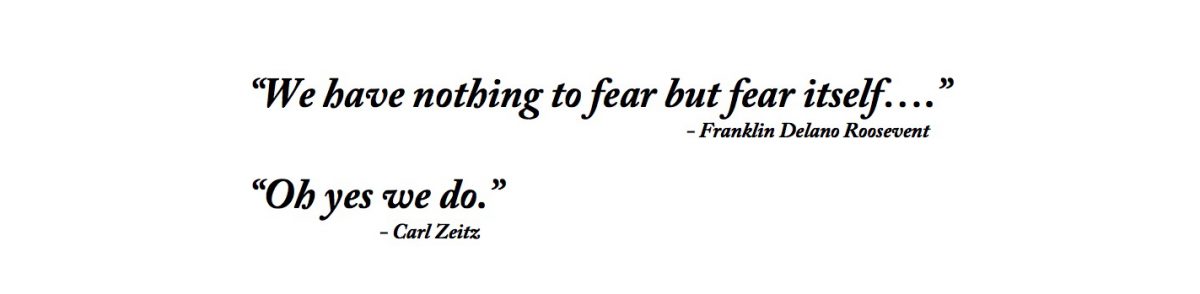
In his first inaugural speech, FDR famously assured Americans, “The only thing we have to fear is fear itself”.

What would he have done if Covid-19 had been his enemy rather than the Great Depression or, later, Nazi Germany and Imperial Japan?

FDR would have organized something as big as the New Deal, something as complete and urgent as the Manhattan Project to get it done — and get it done in time. Right now, right now, time is a-wasting.

The Year of the Plague, 2

Perspective

Clearly, we are living through one of the most consequential events in recorded human history.

Real perspective on what is happening and what happened, as in what will happen in the next five to ten years and how the pandemic impacted and changed human life and civilization, will need the distance of at least 50 years retrospective.

It’s a world turned upside down about which historians and others in the second half of this century and beyond will write hundreds, probably thousands of books. With that ability to look back they will see what we cannot. How it happened, how and when it ended — if it does  –and how it changed us, our country, the world, and society and civilization.

It is likely the dawn of a historical epoch to rival the rise and all of the Roman Empire, the advent and spread of Christianity and later of Islam; the Crusades; the 14th Century plague estimated to have killed up to half of the people in the world in that less densely populated time, and of course in the last Century two horrific World Wars bringing the dawn of the atomic age.

Because beyond the immediate crisis, beyond its resolution, whatever that will look like in the next year or two or three, we are entering a new epoch in which the world’s economy is being stood on its head; in which strong, swift and perhaps unseen currents of profound social, political, governmental and economic limitations and change are already resulting.

As all that portends in the future, it becomes and has become clearer every day that in the immediate emergency we do not have a national response, we do not have a government, or leadership of it to understand this much less deal with it. Nor do we have a government able to imagine what comes after or to begin trying to discern such and begin to chart a course forward.

Instead but for the good conduct of most – not all – but most of its citizens and other inhabitants -and the wisdom of many governors, mayors, and other local officials, our country is in chaos.

No sensible person is surprised by this given that being thoroughly venal, purposefully ignorant, grossly incompetent and in all ways unhinged, the president personifies chaos.

Trump is Nero and Caligula congealed in a single entirely debased man,, his mind diseased, his psyche depraved.

Thus, this will go on in the United States for some time past when a competent administration led by a real president would have taken control with rational policies and sane, consistent, informed, calm and calming leadership.

A rational, competent administration would be running a parallel exercise to begin to plot whatever return to active life becomes permissible and possible and a federal role in that.

There is no evidence of this happening nor is there likely to be from this misshapen, broken, vile administration.

It is as if the planet is striking back at humankind for our abuse of it and that as part of this reaction Trump was sent as to inflict this chaos and as a harbinger of the chaos to come.

We need a new president. Whatever happens, however hard he and his party attempt to make voting, make you sure you vote if, as someone said just now, you have to crawl over broken glass to do it.

The Whole Presidential Choice

Notwithstanding so many so taken by Andrew Cuomo the choice, Nov. 3 will be Joe Biden or the incumbent, President Chaos.

Here then the question I ask always and that you should ask anyone you encounter who would consider the latter rather than the former. And with the question, the answer becomes obvious.

How many people are you voting for when you vote for president? I ask this over and over and over again.

Know what the answer is that I get from most everyone? They answer one, they say they are voting for one person.

Well, that’s not so. That’s nonsense.

When you vote for president you are voting for 4,000 people the president and/or his appointees will appoint in the senior ranks of the federal government (and whatever share of the 870 judges including justices of the SCOTUS he or she will get to name).

Of those 4,000 key federal appointees, 1,250 require Senate confirmation as do the judges.

From Merrick Garland’s nomination for the Supreme Court, across the federal circuit courts of appeal to the district court level, Senate Republicans led by Mitch McConnell blocked dozens and dozens and dozens of judicial nominations made by Barrack Obama.

Democrats will want not just Joe Biden in the White House but a Senate majority to make certain that does not continue and to begin to right the grotesques imbalance in the judiciary created from the hundred of extreme rightists appointed by Trump and confirmed by McConnell and his majority to federal courts across the nation. And that is especially so for the Supreme Court.

Even more, than all those people, when you vote for president you vote for an entire belief system and philosophy concerning the uses and purposes of government.

We will make a choice between a national government and it political hierarchy, thrown together crudely from red states, business and know-nothings like the Tea Party, the Freedom Caucus, (two of whose members have risen to be chief of staff to this president) or from the Democratic Party and its political hierarchy drawn from think tanks, academia, experienced leaders in state governments, prior administrations and from members of Congress when they can be spared from blue districts.

It is a choice between a political belief system that has as its mission tax cuts, advantages for the advantaged, racial separation and tension, the denial of voting and civil rights, or a belief system that has produced most of the progress this nation has experienced in the past 100 years.

Progress in the form of the Federal Reserve and FDA established under Woodrow Wilson; of the New Deal (Social Security, the SEC, the TVA, the NLRB) and a new international order in the U.N. the World Bank and the IMF under FDR; of the Fair Deal, the DoD and NATO under Harry Truman; of the Great Society and the Civil and Voting Rights Acts under Lyndon B. Johnson; of the CHIP under Bill Clinton, and of the economic rescue of a broken economy and the ACA under Barrack Obama.

Whose belief system do we want next Jan. 20? Who  do we want to appoint those 4,000 people and judges starting Jan. 20 next year?

That’s the choice, that is what you are deciding when you vote, not a choice between two men, but between an entire system and belief in government and governance and the purposes and uses of government for the many or for the few?

A choice between rational, experienced people able to deliver rational purposeful administration and management of government, or for four more years of chaos that proceeding from the present circumstances will destroy much of what is left of the United States and any hope or ability to salvage a future from the epidemic’s societal, civic and economic conflagration.

Transition

These next thoughts do not assume or presume a Biden victory in November but are predicated on one.

In an ordinary presidential transition, itself fraught enough, a president-elect traditionally will have vetted and have in mind and announce a series of appointments in December and early January of cabinet secretaries, his National Security Advisor and key subordinates, his choice for National Intelligence Advisor.

He will also announce key White House staff – chief of staff, communications chief, press secretary to being immediately handling the flow of transition announcements, chief domestic policy and economic advisors, choices for his Economic Policy Council and other senior White House positions.

His transition apparatus will probably have in place some early necessary executive orders and in the case of this transition several of them to begin to undo the savagery, meanness, and stupidity of those issued by Trump.

Knowing full well that Ruth Bader Ginsburg must get real, something she failed to do in 2013 or 2014 when President Obama had the support of a Democratic Senate, and so must retire if there is a Democrat in the White House: Knowing too that Stephen Breyer will no doubt want to do the same next July, President-elect Biden should also have put in motion decisions about two high court nominees.

That would all be so in the course of a normal transition. But this will not be normal for several reasons.

First and foremost without known the extent of recovery (or the potential for setback) ours will be a nation coming out of and seeking a way forward after the pandemic has quieted – in a world doing the same.

Second, it will be a transition from Trump and we can certainly imagine that he will not go quietly, that he will not cooperate, that he will undermind the incoming president in any and every way he can and that until Inauguration Day he will threaten and suggest he won’t leave (don’t worry if the Army has to carry him out the back door of the White House, he will be gone if he loses).

Then too  but not necessarily lastly, even without the Pandemic the damage done by Trump is so vast that it cannot be undone, reversed and overcome in several years. As much of it that can be reversed will need to be as soon as possible.

All of this suggests that the Biden transition should be in full swing now, that parallel to choosing a running mate, coordinating with the DNC if there is – or if there is not – a national convention and then running a campaign in the oddest of circumstances – the Biden transition must start now.

Usually, transition work starts in the fall, parallel to the campaign. For all the reasons and circumstances described here, it really needs to start now effective to put the new president in the position he would be in not in Inauguration Day but at least at the end of his third month in office. The first 100 days of the Biden presidency must look like the scond three months would have in ordinary time.

Those 4,000 people he will need at the top with him, especially the 1,250 needing Senate confirmation? He has to start identifying them now for the earliest possible vetting following the election by the FBI and Secret Service. He should be directing the formulation of an entire plan of executive orders and his first message to Congress asserting his legislative goals in the first year of his presidency.

Let’s trust Joe Biden, in all his experience and in all the experience of those around him, knows this today.


Voting in The Year of the Plague: The Earlier, the Better

The Year of the Plague continues with grave uncertainty sending many to their graves, with growing understanding no one knows when it will end, if it will end, how to tell when it ends, or at least if and when the government will be able to say it has ended with growing appreciation the world on the other side will never be the same: With all that, the United States must conduct its election for president Nov. 3.

Many among us worry,  will there be an election? The short answer is yes because the long answer is if there is not then we have lost our country. There will be, must be and everyone should proceed with that firm belief.

In thinking about that you and I — probably everyone we know — are asking questions like how are we going to have the election?  What will Election Day be like? Will there be an Election Day or will or can the whole election be by early voting? As to the latter, under existing laws in the states – the states govern the conduct of elections – we need the polls to open Nov. 3.

Democrats attempted to inject this concern into the $2.2 trillion intermediate fiscal and financial rescue package that became law last month. The idea was to send money to the states for them to plan, expand and manage early voting. Republicans were having none of it. The bill became law without such funding.

Democrats prosper at the polls when more people vote. Republicans do better when fewer people vote. Those are perhaps political aphorisms – but they are true.  In the past 10 years, Republican legislatures and governors in states including  Florida, Georgia, Kansas, Alabama, Texas, and Wisconsin among others have enacted laws to limit voting while purging voters rolls. That they have done the things they’ve done to limit voting is a fact.

A slim five-member conservative majority on the U.S. Supreme Court appointed variously by Republican presidents struck down the heart of the 1965 Voting Rights Act, a law enacted in response to the brutality unleashed at the Selma, Ala. bridge that set loose a national uprising — outside the south — for voting rights.

Over the past 20 years, many states introduced early voting, more robust in some than in others. As we looked at the prospect of the 2020 election about two months ago through the prism of record Democratic primary election turnouts, it appeared likely Nov. 3 would produce a record presidential year turnout.

It looked to be a turnout of such size as to portend the defeat of Donald Trump, the election of a Democratic president, retention of the House by Democrats and a very real chance for Democrats to win control of the Senate.

Now the concern is how the COVID-19 crisis will affect voting, suppress voting. Will we be able to vote at the polls on Nov. 3? What are the provisions for early voting? What states have early voting? Is early voting the same in every state? Could it be, should it be?

The answers are that early voting is different state by state and not every state has early voting.  Also that it is arguable under the 10th Amendment that a national, uniform early voting system could be imposed at least in federal elections, with the likely answer being no because seemingly it is not constitutional. While we can leave that to the legal scholars to argue down the road, it is not happening this year.

What Democrats wanted to include in the rescue law –  the stimulus — was funding for states to gear up as much early voting as possible, administer it and help them fund in-person voting at the polls — if that can take place — with whatever extra costs for social distancing management at the polls would be necessary.

If there is a fourth rescue bill, it must address this urgent matter.

As to the rest, this is an overview of the early voting situation:

Some form of early voting is provided by 38 states and the District of Columbia. These cover a wide range of mechanisms and options. In many states, voters can request and mail in a vote, in many also those ballots need to be dropped off at county offices or at polling places. Each state is responsible for its franchise. Each state makes its own laws for the conduct of elections from the basics like polling hours to the mechanisms of early voting.

Nine states, Alabama, Connecticut, Kentucky, Mississippi, Missouri, New Hampshire, Pennsylvania, Rhode Island, and South Carolina do not have early voting – an obvious problem unless they change their election laws this year to provide for it and then make sure their voters understand there will be an option to showing up at the polls Nov. 3. It’s a tall order.

One state, Delaware, has enacted early voting but not will put it into effect in 2022 unless it revises the law to implement it this year.

Three states, Colorado, Oregon and Washington have early voting only with all ballots cast by mail up to and including election day.

Among the 37 states and the District of Columbia with early voting this year, each has its own laws, rules, and regulations governing key aspects like how long before Election Day early voting begins, when it ends in advance of Election Day,  or when and how early voting ballots can be applied for and how, when and where they should be returned.

Every state is different. One would expect both the Trump and Biden campaigns to focus on informing their voting bases about how to vote early state by state. Some states, for example, Alaska Illinois, Maryland, New York, and Ohio allow ballots to be returned on Sundays, others limit that to weekdays or to Monday through Saturday.

The span of early voting ranges from 45 days to a few days before Election Day, with an average of 22 days; and generally but not universally ends a few days before the election, though several states permit ballot return up to or even on Election Day.

The following lists the early voting states with a notation of their schedules for the beginning and end of early voting  (ED in any below refers to Election Day).

While many laws are written to specify that early voting ends 3 days or five days or one day before Election Day, for ease of reference and understanding those deadlines are translated below into the specific immediate days of the week ahead of the election. For example, Tennessee closes early voting “five days” before Election Day. This is translated here to Thursday, meaning the Thursday before Nov. 3. The end dates are the second notation for each state.

Alaska, 15 days; ED (again by example for clarity, the second notation means early voting in Alaska continues right into Election Day).

-0-

Arizona, 26 days; Friday.

Arkansas, 15 days; 5 p.m. Monday.

California, 29 days; Monday.

District of Columbia, 7 to 15 days; Saturday.

Florida, 10 to 15 days (can vary by county); Saturday, or Sunday in Federal/state election by local option.

Georgia, 4th Monday before ED; Friday.

Hawaii, 10 working days; Saturday.

Idaho, 3rd Monday before ED; 5 p.m. Friday.

Illinois, 15 days; Monday.

Indiana, 28 days: noon Monday.

Iowa, 29 days; 5 p.m. Monday

Kansas, 20 days; noon Monday.

Louisiana, 14 days; 7 days before ED.

Maine, 30-to-45 days; 3 business days before ED.

Maryland, 2nd Thursday before ED; Thursday.

Massachusetts, 11 days; Friday.

Michigan, 40 days; Monday.

Minnesota, 45 days; 5 p.m. Monday.

Montana, 30 days; Monday.

Nebraska, 30 days; ED.

Nevada, 3rd Saturday before ED; Friday.

New Jersey, 45 days; 3 p.m. Monday.

New Mexico, 3rd Saturday before ED; Saturday.

New York, 10 days; Sunday.

North Carolina, 3rd Wednesday before ED; 7 p.m. Friday.

North Dakota, 15 days; Monday.

Ohio, 28 days; 2 p.m. Monday.

Oklahoma, the Thursday before ED; 2 p.m. Saturday.

South Dakota, 45 days; 5 p.m. Monday.

Tennessee, 20 days; Thursday.

Texas, 17 days; Friday.

Utah, 14 days; Friday.

Vermont, 45 days; 5 p.m. Monday.

Virginia, 2nd Saturday before ED; 5 p.m. Saturday.

West Virginia, 13 days; Saturday.

Wisconsin, 14 days; Sunday.

Wyoming, 40 days; Monday.

The lesson? To protect your vote, to assure the greatest turnout, if your state has early voting — do it!

Voting in The Year of the Plague: The Earlier, the Better

The Year of the Plague continues with grave uncertainty sending many to their graves, with growing understanding no one knows when it will end, if it will end, how to tell when it ends, or at least if and when the government will be able to say it has ended with growing appreciation the world on the other side will never be the same: With all that, the United States must conduct its election for president Nov. 3.

Many among us worry,  will there be an election? The short answer is yes because the long answer is if there is not then we have lost our country. There will be, must be and everyone should proceed with that firm belief.

In thinking about that you and I — probably everyone we know — are asking questions like how are we going to have the election?  What will Election Day be like? Will there be an Election Day or will or can the whole election be by early voting? As to the latter, under existing laws in the states – the states govern the conduct of elections – we need the polls to open Nov. 3.

Democrats attempted to inject this concern into the $2.2 trillion intermediate fiscal and financial rescue package that became law last month. The idea was to send money to the states for them to plan, expand and manage early voting. Republicans were having none of it. The bill became law without such funding.

Democrats prosper at the polls when more people vote. Republicans do better when fewer people vote. Those are perhaps political aphorisms – but they are true.  In the past 10 years, Republican legislatures and governors in states including  Florida, Georgia, Kansas, Alabama, Texas, and Wisconsin among others have enacted laws to limit voting while purging voters rolls. That they have done the things they’ve done to limit voting is a fact.

A slim five-member conservative majority on the U.S. Supreme Court appointed variously by Republican presidents struck down the heart of the 1965 Voting Rights Act, a law enacted in response to the brutality unleashed at the Selma, Ala. bridge that set loose a national uprising — outside the south — for voting rights.

Over the past 20 years, many states introduced early voting, more robust in some than in others. As we looked at the prospect of the 2020 election about two months ago through the prism of record Democratic primary election turnouts, it appeared likely Nov. 3 would produce a record presidential year turnout.

It looked to be a turnout of such size as to portend the defeat of Donald Trump, the election of a Democratic president, retention of the House by Democrats and a very real chance for Democrats to win control of the Senate.

Now the concern is how the COVID-19 crisis will affect voting, suppress voting. Will we be able to vote at the polls on Nov. 3? What are the provisions for early voting? What states have early voting? Is early voting the same in every state? Could it be, should it be?

The answers are that early voting is different state by state and not every state has early voting.  Also that it is arguable under the 10th Amendment that a national, uniform early voting system could be imposed at least in federal elections, with the likely answer being no because seemingly it is not constitutional. While we can leave that to the legal scholars to argue down the road, it is not happening this year.

What Democrats wanted to include in the rescue law –  the stimulus — was funding for states to gear up as much early voting as possible, administer it and help them fund in-person voting at the polls — if that can take place — with whatever extra costs for social distancing management at the polls would be necessary.

If there is a fourth rescue bill, it must address this urgent matter.

As to the rest, this is an overview of the early voting situation:

Some form of early voting is provided by 38 states and the District of Columbia. These cover a wide range of mechanisms and options. In many states, voters can request and mail in a vote, in many also those ballots need to be dropped off at county offices or at polling places. Each state is responsible for its franchise. Each state makes its own laws for the conduct of elections from the basics like polling hours to the mechanisms of early voting.

Nine states, Alabama, Connecticut, Kentucky, Mississippi, Missouri, New Hampshire, Pennsylvania, Rhode Island, and South Carolina do not have early voting – an obvious problem unless they change their election laws this year to provide for it and then make sure their voters understand there will be an option to showing up at the polls Nov. 3. It’s a tall order.

One state, Delaware, has enacted early voting but not will put it into effect in 2022 unless it revises the law to implement it this year.

Three states, Colorado, Oregon and Washington have early voting only with all ballots cast by mail up to and including election day.

Among the 37 states and the District of Columbia with early voting this year, each has its own laws, rules, and regulations governing key aspects like how long before Election Day early voting begins, when it ends in advance of Election Day,  or when and how early voting ballots can be applied for and how, when and where they should be returned.

Every state is different. One would expect both the Trump and Biden campaigns to focus on informing their voting bases about how to vote early state by state. Some states, for example, Alaska Illinois, Maryland, New York, and Ohio allow ballots to be returned on Sundays, others limit that to weekdays or to Monday through Saturday.

The span of early voting ranges from 45 days to a few days before Election Day, with an average of 22 days; and generally but not universally ends a few days before the election, though several states permit ballot return up to or even on Election Day.

The following lists the early voting states with a notation of their schedules for the beginning and end of early voting  (ED in any below refers to Election Day).

While many laws are written to specify that early voting ends 3 days or five days or one day before Election Day, for ease of reference and understanding those deadlines are translated below into the specific immediate days of the week ahead of the election. For example, Tennessee closes early voting “five days” before Election Day. This is translated here to Thursday, meaning the Thursday before Nov. 3. The end dates are the second notation for each state.

Alaska, 15 days; ED (again by example for clarity, the second notation means early voting in Alaska continues right into Election Day).

-0-

Arizona, 26 days; Friday.

Arkansas, 15 days; 5 p.m. Monday.

California, 29 days; Monday.

District of Columbia, 7 to 15 days; Saturday.

Florida, 10 to 15 days (can vary by county); Saturday, or Sunday in Federal/state election by local option.

Georgia, 4th Monday before ED; Friday.

Hawaii, 10 working days; Saturday.

Idaho, 3rd Monday before ED; 5 p.m. Friday.

Illinois, 15 days; Monday.

Indiana, 28 days: noon Monday.

Iowa, 29 days; 5 p.m. Monday

Kansas, 20 days; noon Monday.

Louisiana, 14 days; 7 days before ED.

Maine, 30-to-45 days; 3 business days before ED.

Maryland, 2nd Thursday before ED; Thursday.

Massachusetts, 11 days; Friday.

Michigan, 40 days; Monday.

Minnesota, 45 days; 5 p.m. Monday.

Montana, 30 days; Monday.

Nebraska, 30 days; ED.

Nevada, 3rd Saturday before ED; Friday.

New Jersey, 45 days; 3 p.m. Monday.

New Mexico, 3rd Saturday before ED; Saturday.

New York, 10 days; Sunday.

North Carolina, 3rd Wednesday before ED; 7 p.m. Friday.

North Dakota, 15 days; Monday.

Ohio, 28 days; 2 p.m. Monday.

Oklahoma, the Thursday before ED; 2 p.m. Saturday.

South Dakota, 45 days; 5 p.m. Monday.

Tennessee, 20 days; Thursday.

Texas, 17 days; Friday.

Utah, 14 days; Friday.

Vermont, 45 days; 5 p.m. Monday.

Virginia, 2nd Saturday before ED; 5 p.m. Saturday.

West Virginia, 13 days; Saturday.

Wisconsin, 14 days; Sunday.

Wyoming, 40 days; Monday.

The lesson? To protect your vote, to assure the greatest turnout, if your state has early voting — do it!

Voting in The Year of the Plague: The Earlier, the Better

The Year of the Plague continues with grave uncertainty sending many to their graves, with growing understanding no one knows when it will end, if it will end, how to tell when it ends, or at least if and when the government will be able to say it has ended with growing appreciation the world on the other side will never be the same: With all that, the United States must conduct its election for president Nov. 3.

Many among us worry,  will there be an election? The short answer is yes because the long answer is if there is not then we have lost our country. There will be, must be and everyone should proceed with that firm belief.

Continue reading “Voting in The Year of the Plague: The Earlier, the Better”

The Year of the Plague – 2

The Nomination

Come June 2 New Jersey had been scheduled to hold the last major primary. Now at least 6 more states have postponed primaries to June 2, no longer the last big date on the primary schedule but, as things stand, But now the biggest date of the primary season.

June 2 will be Super Tuesday Redux.

Thus far 10 states and Puerto Rico have postponed voting from March and April. Kentucky has put its primary off to June 23, a date also under consideration by hard-hit New York State.

Other states are making other arrangements. Ohio, whose primary was postponed from April 3 when Illinois, Arizona, and Florida delivered massive wins to Joe Biden, is now operating a rolling election by mail that will conclude probably with in-person voting in late April if that is possible although the best guess is Ohio will have to declare its primary over when the mail-in deadline arrives.

But even if and when all primaries can be conducted  – how will the Democratic Party actually confer its nomination on Biden? Every new day makes it more and more likely, in fact, more and more certain the party’s national convention, scheduled to kick off July 13 in Milwaukee, will be, will have to be canceled.

A gathering that brings together 25,000 people including 4,500 delegates, all Democratic U.S. Senators and House members, all non-incumbent  Democratic candidates for those offices, half the nation’s governors, and as many as 10,000 from the media along with all numbers of support and service staff simply is not going to happen.

Traditionally any Democratic Speaker of the House would preside. Not a good idea to risk 79-year-old Nancy Pelosi in what would be a Covid-19 stew. Or to risk anyone else, including of course the nominees for president and vice president, especially when we assume the nominee will be a 77-year-old man with a pre-existing condition.

How can this be done then?

Well, that is up to the Democratic National Committee. It would have to change the rules to give itself the authority to confirm the candidate with the most delegates as the nominee — whether or not – whether or not –  all primaries eventually and actually take place.

Such a plan could be facilitated if a man who is so caught up in his ambition as to be out of touch with reality, Bernard Sanders, would quit the race and call on the DNC to confirm Biden now as the nominee.

That is unlikely. Sanders is consumed by Sanders. We know one day he will have his page in American history. How it will portray him at its end is up to him.

Andrew Cuomo

New York’s governor has demonstrated presidential leadership and management qualities and skills in ways more certain and defined than anyone has or could in campaign debates, on the hustings or in any prior public office. Indeed more-so than he has in his prior eight years as governor, albeit he is a take-charge man.

He is 15 years younger than Joe Biden. You and millions of others lately have said to themselves, to friends, to the family – he should be the Democratic nominee and pondered if that could happen?

Not in any circumstance we know.

For it to happen would call for an even greater gesture toward history than the one mentioned as to Sanders. It would call on Biden to call for that. Don’t imagine that will happen, and for it to happen so much more than we foresee now would have to happen with regard to the severity of the Covid-19 catastrophe.

In politics, keep your eye on the possible, the likely and the seemingly inevitable. It is very much the most that usually happens.

Short of declining a nomination he has all but won, Biden could retract his pledge to choose a woman to be his running mate in favor of a man who demonstrates every day what a president looks like, sounds like and does.

But that is fraught with all kinds of political drawbacks and pitfalls so it is no more likely to happen. Half the Democratic world would hail such a momentous decision and half would decry it while all Republicans would be cheered by the dissonance and disorder it would create for Democrats.

Cuomo, who like his father almost certainly aspires to the presidency, has emerged in this as a man of presidential timber and quality. He has always been an abrasive, contentious figure, not well-loved but respected and yes feared in politics in his state. He has in this crisis transformed the public’s understanding and appreciation of him. He has their back and they know it. The whole nation knows it and the comparison with the creature in the White House is stark.

Will Cuomo be president one day? Perhaps. But right now, many wish he was and could be and it is politically very hard to see how he can or could become so in 2021.

Trump

What is there to say that has not been said?

Our language can no longer be polite when talking about Trump in this grotesque moment in history. He is profane. The language must be profane.

So, this:

The fucker cannot stand being upstaged. He is outraged — outraged — that the virus has upstaged him

How dare it? How dare anyone or anything, even a worldwide pandemic, dare to upstage him? He, reality star of the universe.

And so he attempts each day to bend it – the virus and its historic emergent moment – to him.

Thus, in defiance of science, he decreed the country must “open” on Easter.

Well, whether or not Jesus rises on that Sunday, the economy must, we must – we must rise and work.

He wants, if we are crucified on a viral cross, it not be in His name but in his name.

Multiple Choice Question:

Since clearly1,000 deaths have not, it will take what number of Covid-19 deaths in the U.S.A. to convince Trump’s horde that he lies?

A) 2,500

B 10,000

C) 25,000

D) 50,000

E) They will never, ever believe he is ever wrong until someone they love dies.

Answer: E

Why?

Because they believe only him, receive everything they think they know from Fox and its ilk in the right-wing media and never look outside those channels.

He speaks to them through Fox, through his tweets and daily viral briefings. They take him as gospel.

Red States

The Kerner Commission appointed by President Lyndon B. Johnson to examine the causes of  urban riots in the late 1960s (chaired by Otto Kerner the then governor of Illinois and one of the many to hold that office who ended up in federal prison) is famous for saying this in its report:

“We are two nations … separate and unequal.

Today again the United States is two nations, separate and unequal.

We are blue states distinguished by high levels of education, income, the high tech industry, and service economies; by better health care, higher penetration of health coverage; valuing the arts and culture; states that are much the more cohesive societies with major urban and suburban population centers and mobile populations and, in this grave moment, distinguished by enlightened leadership, witness Governors Andrew Cuomo, Phil Murphy, Larry Hogan, Tom Wolf, Gavin Newsome, Jay Inslee.

Then there are red states distinguished by poor educational attainment, failed industries, lower incomes, higher uninsured immobile populations, worse health care systems, dreadful health outcomes, rural majorities overcome by drug epidemics, and low and very lowest ratings across the gamut of socio/economic factors that measure the health and well-being of society.

In Blue states very much the most receive information from MSNBC, PBS, and CNN; from traditional, valued, trusted print organs like the New York Times, the Washington Post, the Wall Street Journal (news pages only) the LA Times and from their own regional and local newspapers like the Boston Globe, Denver Post, Philadelphia Inquirer, Pittsburgh Post-Gazette, Baltimore Sun, Richmond Times Leader. The list goes on and it adds venerable national influential magazines like The Atlantic, The New Yorker, and Harpers.

Red state audiences predominantly watch Fox News except when they are watching local news on a Sinclair Broadcasting outlet and receiving from them distorted coverage and stilted, stulted far-right opinion disguised as fact. Those audiences look not to the established daily newspapers that their grandfathers and grandmothers read and rightfully trusted but to a mélange of malicious, fallacious right-wing web sites masquerading as news outlets – the likes of Breitbart, Drudge and even worse and worse.

Red-state white citizens of the right are immune to facts, history, and truth, and demonstrate the metastatically pure evil of a far-right media machine that alone informs the white populations of the red-state world.

At least in an allegorical sense all the Fox creatures like Ingram and Hannity, or on the radio like Limbaugh, Beck, and their ilk, or on-line via Breitbart and Drudge are guilty of murder  – the murder of truth, government and of a civil, informed society.

Say Thanks

To those still going out to do their marketing and such like chores, when you do go to the supermarket be sure to give the people working there a special thanks for the simple fact that they come to work.

They have become the first line of the first responders, dealing with the public with little protection while keeping order, sanitation, and FOOD in their markets.

When you stand opposite a cashier the distance is maybe two feet or less. You do it once that day, every few days.

They do it all day long, every day across from hundreds and hundreds of strangers making them more at risk than police or firefighters these days. Thank them for doing their jobs, this is not something any of them ever signed up for.

Musings on the Presidency:

Trump has been meeting with this industry and that industry. The meetings, in so much as we are told about them, go like this: Industry executives bow and scrape, tell him he is indispensable, tell him they could not do it without him, that they look to his incredible leadership and then ask for billions of bucks.

He tells them they are all great and he’ll get the money for them and they should keep working and we’ll all get through this.

And that is pretty much a Trump meeting with anyone about anything except if he is bullying someone into doing something wrong.

What should a presidential meeting be? In the context of a meeting with an industry’s leaders, its CEOs?

It begins with a thoroughly researched memo to the president — a memo he actually reads – identifying each participant with bio, describing in detail their companies and their situations in general vis-a-vis the emergency.

He should know where they were born, who they married, divorced if they did; where they graduated from and the arc of their careers to the front offices of their corporations as well as how they get along with their peers, the inter-industry relations that might help set the tone of a White House meeting.

Were it a meeting with auto industry leaders to talk about shifting to ventilator production it would be based on a memo that reports as well the immediate, current contacts with the companies concerning plants they could convert, how long it will take, when they can start to deliver ventilators – and defines ways to set in motion a handoff establishing factory quotas, supply chain transport, allocating products by region and state, etc. That is how we went from producing 4,000 military aircraft in 1940 to 96,000 in 1944.

The meeting is not to congratulate the president. It is for the president to inspire and establish an agreement to production terms, quotas, etc. and then to handoff implementation to someone he has appointed production czar, not unlike Jimmy Byrnes when he ran FDR’s War Production Board for nearly three years during WWII.

That’s how you do being president, instead of lying, winging it, listening to your asshole buddies or your son-in-law and his buddies who know nothing, have no expertise and are playing you every day with eyes on a fast buck.

No, what you do when you are president is read your briefing books, talk to the experts, defer to them and you don’t – you don’t go out every single day to lie and talk with certainty about things of which you know nothing.

226  days to Election Day, 299 Days to Inauguration Day


The Year of the Plague – 1

With homage to Daniel Defoe, random thoughts because today all thoughts are random.

Martial Law

Will it take that to keep tens of thousands of fools off the beaches in Florida, from exercising in public spaces in close proximity?

This is not China, where a despotic government can lock down regions or the entire country or South Korea, where close order drill is the way of a homogenous society.

China tonight reported its first full day without a new case. Can we get to that if thousands of people are going to go to beaches and find other ways around the kind of lockdown China imposed, that Italy, a far more cohesive nation than us, is managing?

No, we can’t. We are The Americans, the people of Conestoga wagon trains, the open road, no internal borders, no internal documents — except in liquor stores and bars.

What could it take if we keep misbehaving to get us to understand that stay home means stay home?

It could take martial law and suspension of Habeas Corpus, the latter of which we have not seen since Abraham Lincoln dared to do it during the Civil War. Do we want that under Trump? Shudder.

What’s the choice then? Don’t go to the beach, stay at home.

Don’t bet against it, martial law that is, if this is not done by June.

And the Candidate Is? Part XVI

Joe Biden.

Everything yours truly wrote about the potential for a contested convention was true except there came a moment, an exact moment, that being the moment James Clyburn endorsed Biden, a moment when Democrats everywhere realized there was a way out of their deep despond.

They realized it had to be Biden or it would, in fact, go to a fractured convention with no telling how that would end except probably badly and with Bernie Sanders the nominee; and that if it ended with Bernie as nominee it would bring a down-ballot debacle.

It was as if the same thought suddenly occurred to about 30 million people. They all realized, at the same moment, it has to be Joe Biden and that’s that and everyone else, get out. And Bernie? They universally decided, 65% of them that Bernie? Bernie, for Pete’s sake Bernie, either give it up or get run over by us, the Democratic Party’s voters.

Bernie stayed in. Now, he’s been run over and will be out shortly.

Vice Presidential Candidate

He said a woman. So the only question is which woman? One who ran for president and lost? A black woman? Someone we don’t hardly know? Someone no one is thinking about but maybe should?

So, quickly, no, not Kamala Harris. If black voters had thought of her as – had seen her as a black woman she would be the nominee. They did not see her or Corey Booker as their favored candidate, as one of them, speaking for them.

They saw and see Joe Biden as that person because no one but him is the choice of Barack Obama. How do they know he is that choice? Because President Obama already chose him, choosing him 12 years ago.

So, obviously, they see Joe Biden as their candidate. And that means? That means it does not necessarily have to be a black woman in the Veep spot.

What if it is? Who could it be?

Well, everyone agrees on Stacy Abrams except if you get down to it, she doesn’t have the political background. She is a great communicator but…but it’s problematic because we don’t know enough about her and there is not time enough to vet her the way a national ticket candidate should be who is largely unknown.

After all, George W. Bush didn’t know until it was too late that Dan Quail was not very sharp. And then there was the unvetted Sarah Palin.

Congresswoman Val Demmings of Florida is being talked about. Right, mostly you haven’t heard of her. In this woe-begotten time is there time to introduce an unknown? Again, time to really, really vet her. Common sense, as well as political sense, says, NO, there is not..

Who then? Elizabeth Warren? No, she and Biden are not on the same page, never will be and she brings strengths but also infirmities. We know too much about her, she is too vetted, too much a lightning rod to electrify opposition.

Of the other women who ran who perhaps then? Amy Klobuchar perhaps. She was moving up,  wasn’t going to win but was impressing. She has a problem with black voters? Yes. What’s the problem? They had no idea who she was and, by the same measure, she had no idea who they were/are. But as Biden’s choice that would begin to be cured and she is a fast learner.

Someone from out of political left field but known to liberals and Democrats and women in the suburbs? Maybe, but who?

Cecile Richards, a most, a very much most impressive person who, as the former head of Planned Parenthood, would galvanize the woman’s vote, and as the daughter of Ann Richards could perhaps turn Texas blue and if Texas turns blue, the deal is done. I agree, she is an unlikely choice but one not beyond imagining.

What is perhaps the over-riding consideration in his choice of a V.P. candidate?

This. Joe Biden will be 78 on inauguration day. Even If he lives out the term he will be elected to, even if he cannot say it without making himself a lame duck, he is likely to be a one-term president.

So who he chooses is more than just a typical balance-the- ticket choice. It is the choice of someone who more likely than anyone else in the nation right now will be president within five years. That makes it an entirely different choice.

Baseball

I miss it.

Donald Trump

Unfit, unprepared, misbegotten, miserable miscreant. And worse.

Stimulus Packages (Or is it Stimuli Packages?)

Should be paid for now because the Congress will never get around to that if and when this ever recedes into some kind of new normal.

How pay for it?

Reverse much of the Trump $1.9 trillion tax cut, raise the top marginal rate to about 75%, close the hedge fund loophole called carried interest – in fact, close all the loopholes and dodges that famous top 1% uses to evade taxation; attach a 10% surcharge to all income taxes paid on all incomes of $1 million or more and adopt a wealth tax modeled on that proposed by Elizabeth Warren. Raise the capital gains tax to 28%.

Do all of that for at least three years and then revisit it.

The way to save capitalism in the present catastrophe enveloping it? Tax capital and the highest incomes it produces and the wealth it accumulates to finance the financial rescue of American capitalism’s economy. It will come back to everyone, including the wealthy, in spades in several years.

But we cannot add $5 trillion in debt without stepping up by matching it now  — NOW -with substantially equivlent revneue and, by the time this is over. $5 trillion in stimuli packages is not inconceivable

That would be equal to one-quarter of the present national debt.

Any good Republican will tell you that it is not sustainable if you want something like the U.S.A. that you know and remember from just two weeks ago to emerge from this in tact in a few months or many months more.


Stimulating Talk

$1,000 for every adult, defined I suppose as everyone 18 years old and older?

Stupid idea. Why?

Because no one needs $,1000 right now

Some people need $10,000. Some need $20,000.

Some people don’t need more money right now.

And some need to pay a surcharge valued on their 2019 income taxes to pay for what needs to be done.

And some, if in fact, they are so wealthy they are able virtually to avoid taxation, need to be assessed in some other way to help pay the fiscal stimulus to counter this most consequential event.

There has to be a way to differentiate between people laid off or forced into layoffs by business closures and those able to continue to work and thereby able to continue to receive wages and salaries; and between those rarer people, the rich, the wealthy and the super-wealthy who need nothing because they have more than anyone needs.

The former need cash assistance, the latter doesn’t. Most retirees need assistance, but lots don’t.

A payroll tax reduction or elimination is a disguise to wreck Social Security and/or Medicaid. If that is done it is not repairable. When he signed the 1935 Social Security Act into law FDR said, “let no politician mess with my system of Social Security.” A strong caution then, an even stronger one now.

There seems to be a lack of critical thinking about how to structure a stimulus but it ought to contain this thought – that this fiscal stimulus should be designed to rescue those stranded by the vast shutdowns across the economy.

The money they need now is not for discretionary spending because — because that is precisely the kind of spending that has been shut down putting them out of work as waiters and waitresses, cooks, chefs, hotel cleaners, hotel maintenance men, taxi drivers, ticket sellers, ushers, casino workers, cruise ship workers, airport and airlines workers – on and on and on and on.

If you gave upper-middle-class earners $1,000 today what would they do with it? What could they do with it? Buy a set of golf clubs they can’t use now? Take the family to see a Broadway show that’s closed? Go out to an expensive dinner? In what restaurant, where? Buy airplane tickets and book a weekend resort getaway on a plane not flying to a resort that closed yesterday? Buy a new Mac at an Apple store that’s closed?

$1,000 is discretionary for those who don’t really need it but it is a tease and an insult to those who need a great deal more right now and who will need much, much more in the months ahead – especially when we know studies say a substantial majority of Americans haven’t got so much as $400 in savings for a bad time.

This fiscal stimulus package ought to direct spending to make sure those forced out of work by the current public health emergency can pay for necessities — for shelter, food, health coverage and care, some child care if they need it and can arrange it.

The wrong spending in this situation is through any tax decrease. The right kinds might very well include cash grants – but ones made with well-conceived standards and a clear focus on who needs them now and why they are in need?

Grants should be designed to understand the part that maintaining necessary necessity spending will play in maintaining social and civic order before want dissolves into panic and panic, in turn, sets loose chaos and disorder.

But, sadly, public policy too often is not something we make but something that happens to us caused by people who don’t think about consequences or have no experience with understanding how to identify public policy objectives and then design responses to meet them.

There is no evidence that Trump, Mnuchin, the economic midget Kudlow, Kushner, Meadows, any of these benighted characters understand any of this, much less will even think about these kinds of things, weigh them in the balance or look ahead to how what is done now will affect us in July, next September, a year from now.

Why? Because they do not know how to govern but someone has to, someone must. So governors are as best they can but even they do not have the single most important power to be exercised now, that of the federal purse.


Donald’s Dow: Down and Down It Go

In case you are wondering, the Dow was at 19,827 on Jan. 20, 2017 – Trump’s Inauguration Day. It had bottomed out at 6,495 in early 2009 after the 2008 bank crash that happened when George W. Bush occupied the White House, whose deregulators let the housing mortgage bubble, and bubble and bubble into turmoil and trouble until finally it burst, exploding into the Great Recession.


During Barack Obama’s presidency, the Dow gained more than 13,000 points. Donald Trump inherited a market approaching Dow 20,000 and decided he owned it.


So yes, you Trump idiots, the bull market was, to the degree we attribute these things to presidents, an Obama market, built on his administration’s stimulus and auto bailout packages (and the ACA which substantially rationalized the economics of the health care component of our economy, which is, after all, don’t you know and you should, 20% of GDP).


And, not inconsequential to economic confidence, was the confidence inspired by a sane, rational, competent and excellent presidency.


Today, March 12, 2020, the Dow closed at 21,200. It has lost nearly 8,000 points in the past three weeks. It is no longer nearly 10,000 points higher than when Trump took office. That margin is down to 2,300 points and tonight, as this is written, futures are down a further 500 points. At its present pace, the market will be back within a week to where it was when Trump was inaugurated and then likely recede from that.


Were a competent, empathetic person president, the DOW drop would have been but half what it has been. The double down on the drop is all Trump and that Wall Street, not necessarily a smart or disciplined neighborhood in the best of times, at last, has recognized that he is incapable and that we have 10 months before Joe Biden becomes president and begins – begins, begins to restore responsibility, sanity, intelligence and civility to the most important public office in the world — in the world: The American presidency.


What party held the presidency in the market crashes of 1929, 1987, 2008 and now this one, 2020? Why the Republican Party, of course, the party that says it is the party of business. You know, sleepy old Calvin Coolidge who declared, “The business of America is business.”


What party left a balanced budget and/or declining federal budget deficits in 2000 and 2016 to incoming Republican presidents? The Democratic Party of course.


What party has driven the national debt up by hundreds of billions until it is now $2 trillion, nearly equal to GDP? Why the Republican Party, of course, the party that says it is the party of “fiscal responsibility”. Oh well, so much for truth, justice, and the American way.


See a pattern here folks? To quote Harry Truman, “Had enough?” Had enough of Republican fiscal and tax stupidity, rascality, lying, cheating, hypocrisy, wooly headed imbecility? It’s about time you all figured that out. it is long past time you smelled that out because as they say, the corpse stinks from the head and who is the head of that party now? Yah, Donald John Trump.


When Dwight D. Eisenhower became president the highest marginal income tax rate was 91%. When some of his economic advisors came to Ike, a very, careful, honest traditional conservative, and suggested that the top marginal rate should be reduced substantially, he said no. He said the people who earned it in those days — corporate executives mostly then in a time before Hedge funds and that sort of banditry — Ike said they could well afford it and let them pay it (adjusted of course on their returns).


In fact, the 91% top rate was reduced to 71% in the 1961 tax overhaul of what president? John F. Kennedy, a Democrat I do believe. And that was deemed radical. Today, negotiated back and forth between Republican and Democratic congresses over the past 40 years, the top marginal rate is now at a Republican low of 35%. What should it be in the interest of that Republican standard, fiscal responsibility? About where JFK had it 60 years ago. Oh yes, as Ike would have agreed, Jamie Dimon, poster boy for the top tenth of a percent, can well, well, well afford it and should have to pay it as a patriotic duty.


Four Republican presidents since 1980 have presided over and pushed their party’s lemming-like insistence that massive tax cuts grow the economy, with 90 percent of those cuts going to the top 1 percent of wealth holders and income earners, notwithstanding that  90 years ago John Maynard Keynes explained that what grows economies is public spending and investment.


And every time, every single fucking time, Republicans have pushed massive tax cuts. For 40 years now, ever time, without fail, that has resulted in massive deficits, piling up the national debt, creating one economic bubble or another – the savings and loan bubble, the market bubble, the housing finance bubble and now the sheer incompetence and stupidity bubble.


And every one of those bubbles burst, every one of those tax-cut infections has burst like a pestilential sore, spewing economic pus and corruption everywhere.


And each and every time a Democratic president has inherited the mess and been left to clean up the mess, to do what Republicans run on, proclaim and then do the opposite of – achieving fiscal responsibility, reducing deficits, controlling the national debt. Who has done, had to do that in the past 40 years? Democrats. Who has made the mess they rail against the past 40 years and then make all the worse? Republicans. And when one Republican, George H.W. Bush, undid some of the damage with a tax increase, his own party turned on him. After all, they had read his lips, the ones that had proclaimed no new taxes.


This is not partisanship, it is a fact. It is the undeniable, actual fiscal history of the past 40 years of the United States.  That needs to be repeated.


It is the undeniable, actual fiscal history of the United States of America that for the past 40 years Republicans have spilled red ink all over everything,  leaving Democrats to blot it up.


Well, now, to the degree this Republican imbecile,  Trump — and yes the Republican Party which owns him lock stock and barrel as he owns it — to the degree, Trump thinks the market is the economy, his economy is going, going going, GONE.


Governing, It’s About Who Can Govern

As Nevada Democrats caucused (remember that, ancient history by now), Bernie Sanders declared neither the Republican or the Democratic Party establishments could stop him. Lately, as he focused his attack on his last rival, former Vice President Joe Biden, he makes it a point every time to say he is running against the political establishment.

Actually not Bernie, You are running to win the nomination of a major piece of the political establishment, the oldest established political party in the nation, the one with roots in the faction led by Thomas Jefferson that formalized itself as a political party during the time of Andrew Jackson – the Democratic Party.

In the now very unlikely event Sanders becomes the Democratic party nominee for president – in the more unlikely event of his election as president, how exactly does Bernie Sanders propose to govern and with whom?

How exactly does he propose to govern without the Democratic establishment? Because you see, what all this is about — this infernal two years of stupidity called the American presidential election campaign — is about governing.

Four years ago two New Hampshire Newspapers, the Concord Monitor and the Keane Sentinel published a piece I wrote in which I asked this question:

When you vote for president, how many people are you voting for? And then I answered the question with the observation that very much the most people would say they were voting for one person – and further observed that was entirely incorrect.

And that remains so today.

Why? Because when you vote for president you are not voting for one person. You are voting, by various sourced estimates, for 4,000 people the president will appoint across the executive branch of the federal government.

He will appoint them to staff the White House, his cabinet reaching down to the level of assistant secretary, and those he will name to run the entire A to Z gamut of federal agencies, boards, commissions and the like from the SEC and the FCC to the FDA and the CDC/Centers for Medicaid and Medicare — down to the most obscure government offices.

Of those 4,000 presidential appointees, sources say 1,250  or so will need to be confirmed by the United States Senate.

How do presidents find those people? They find them within the long-standing and ever sustaining, rejuvenating, experienced government and political cadres of their parties, the Democratic and Republican Parties because those are the only two parties that get to govern us.

Both major parties have cadres of candidates for those 4,000 positions. They are of course senators and House members, though no president should want to reach into the Senate because those seats are rare.  But the 4,000 are also from academia, business, capitol hill staffs, governors and former governors, statehouses across the nation, policy organizations and think tanks, and more.

Whether you liked George W. Bush or George H.W. Bush or Ronald Reagan; whether you liked Bill Clinton and Barrack Obama, those men and their presidencies were able to draw on their respective parties’ trained, informed, educated, experienced cadres – their experts, their governments in waiting.

If you are a Democrat you didn’t like the people or their policies, programs, legislative agenda, foreign policy and management of government by Republican presidents and their choices to populate the executive branch or if you are a Republican you did not like some or all of them under Democratic presidents.

But – but at least you could understand that the people put into those positions by presidents of either party were, in the main, qualified, able and experienced, especially in the top 500 positions – the ones we read about day in and day out: The cabinet secretaries and their assistant and deputy secretaries, the CIA, the FBI, the NSC, the DNI, the prominent and not so prominent federal boards and commission. Current example? The CDC and its several parts.

Among the reasons the Trump administration is the worst thing to happen to the United States of America since Pearl Harbor is that by and large and for the most part — and really overwhelmingly the Republican cadres – that party’s human infrastructure of government-ready policymakers and managers — stayed out, estimating correctly the career-ending catastrophe this administration would be.

They knew what was coming. They wanted no part of it. They were right and so instead we have Jared Kushner, Ivanka Trump, and their ilk.

The Republican Party’s personnel infrastructure did not know Donald Trump. He did not know them. He made it clear he didn’t care to know them.

He could, as he said, do it all alone or nearly so with his scrum of toadies, incompetents, screaming meemies like Steven Miller, other assorted henchmen, and lest we forget, his gangster family.

Shortly before Trump was elected Chris Christie, then governor of New Jersey was tasked with managing the transition. He put together the top of a government in waiting and more that goes into a sensible transition. Hillary Clinton similarly had a detailed transition in progress.

Trump threw out Christie and his transition planning because his nasty son-in-law has it in for Christy because Christy prosecuted Jared Kushner’s father, Charles Kushner,  for setting up his own brother, Jared’s uncle, to be blackmailed with a videotape of the uncle with a hooker that Charles had sent to his sister-in-law. Nasty people.

And so Jared’s pique killed what slim chance there was for a reasonable transition. Instead we got this misshapen, malformed administration populated by misanthropes, gangsters, hangers-on, lobbyists, and a general assortment of know-nothings. For very much the most part, the Republican government in waiting stayed out.

Fast forward now to Bernie Sanders. He is not a Democrat. He has never helped the Democratic Party. When he runs for the Senate he files as a Democrat, thereby assuring no one will challenge him in Vermont. He wins on the Democratic Party line and immediately after being elected he resigns from the party.

He hurt the Democratic Party in 2016. He is hurting it again. He has extorted if for position in the House and Senate for more than 30 years. He seeks the Democratic nomination for president while making it clear he is not a Democrat and disdains the Democratic Party.

He has a fervent following and yes, it is young. Its masses believe he will erase their college debt, give them a new system of free universal medical care and more and that he can, as Donald Trump said, do it alone. He can’t of course.

Reading back into the New Deal, looking at how FDR’s Brain Trust and cabinet members like Harold Ickes and Francis Perkins assembled the legislation that became the hallmarks of the New Deal, especially and above all the Social Security Act of 1935, to this very day — to this very day — the single, most far-reaching socio-economic program ever enacted by the United States of America, we understand that it takes more than rhetoric.

It takes more than good intentions, even best intentions, to achieve broad social and economic progress and fairness. It takes political know-how and an experienced political cadre to get it done. It takes a party and its human infrastructure.

FDR above all understood that and constructed even from his time as governor of New York State what has become the ongoing, renewable and renewing generational infrastructure of political and policy architects and makers of the Democratic Party.

Bernie Sanders has been the foe of that Democratic infrastructure virtually his entire adult and political life. He does not come from or have access to what he calls the Democratic Party establishment that is, in reality, the foundation on which the Democratic Party constructs national governments when it is chosen to lead them in the White House.

Would that Democratic core of experienced policy, political and administrative people work for Sanders any more than the Republican version was willing to work for Trump?

It seems unlikely they would and, without them, Sanders could not govern and certainly without them he would absolutely not have the trust of the House and Senate if both come into Democratic Party control next January.

Do Sanders voters understand this? Do they know the right answer to the question, how many people are you voting for when you vote for president? Or as Trump declared, do they believe that Bernie and Bernie alone can do it?

He can’t. No one can.

In the American republic, in the systems to govern our republic that evolved from when Thomas Jefferson and Alexander Hamilton in their differences confirmed our division into what their boss, George Washington, called “factions”, we have seen presidencies incorporating the political parties come and go, rise and fall.

But always, until this presidency, presidents have looked to and been able to look to well-formed party infrastructures to populate their governments to carry out their policies and provide the polity of functional administrations.

Bernie Sanders makes it clear he is not a Democrat. Could he govern without the Democrats whose nomination he asks for but whose political party he disdains?

Not likely. Very unlikely. Highly unlikely.