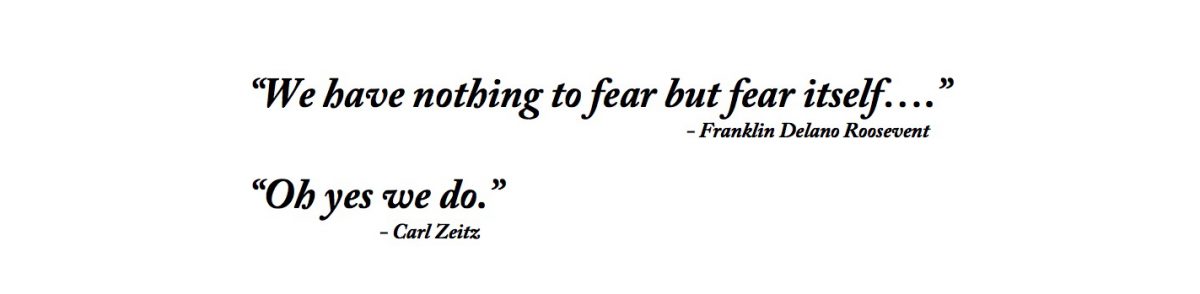
Let’s continue from Part l of this piece to look at both Impeachment and the 25th Amendment.
Now, much is made these days of understanding the original intent of the founders who drafted the Constitution. There is an entire school of legal and judicial thinking that comes out of an organization of hard right wing attorneys and legal thinkers called the Federalist Society. It has grown since its founding in 1982 into an injector of new hard and far right judges and Supreme Court justices into the federal judiciary. You might be surprised to know that, root and branch, it comes from the soil of the Yale and Harvard University Law Schools as well as the more likely source, the University of Chicago Law School.
The late Justice Antonin Scalia was in many ways godfather of the Federalist Society and its infection of the federal judiciary through the bacillus of the doctrine of original intent. His presently designated and nominated successor, U.S. Appeals Court Judge Neal Gorsuch, has been a member of and is a faithful and ardent subscriber to Federalist Society thinking and doctrine, as are Chief Justice John Roberts and Justices Clarence Thomas, and Samuel Alito. Justice William Kennedy, is too, albeit he is a more flexible man than these, which is why he holds the balance of power on the court.
Theirs is a school of law, really of right wing political doctrine disguised as law literally in service to the Koch brothers, that holds we must look to the original intent of the drafters of the Constitution for each and every understanding of how to read it, interpret it and use it.
Well, I’ll explore that doctrine soon enough in another post about Judge Gorsuch. But for the sake of this one let us first ask what the Constitution actually says about impeachment, and then what it says in the 25th Amendment to the Constitution.
As to this notion of original intent, one wonders then why is there a 25th Amendment at all? Why are there any amendments at all? Why have there been a total of 27 since adoption of the original Constitution in 1787, the vast majority of which were drafted long after the original drafters were dead and gone.
If all we need to know about the Constitution and its meaning is contained in the original thinking about it — which did not include a single one of the 27 amendments, why are there amendments?
The answer to that is that the founding authors included a provision for amendment so they anticipated changes, which means they didn’t believe for a second — as the Federalist Society would have us believe — that what they had written was immutable holy writ.
Ok, all well and good. In Article II — Article I addressed what they thought to be the more important branch of government given their experience from July 4, 1776, the Legislature — In Article II, they established the presidency. In both articles they established the constitutional basis and mechanisms of impeachment
So as to impeachment, the following are all and the entirety of what the original un-amended Constitution says about that subject.
Article I, Section 2, Paragraph 5
“The House of Representatives shall chuse their Speaker and other Officers; and shall have the sole Power of Impeachment.”
Article I, Section 3, Paragraphs 6 & 7
“The Senate shall have the sole Power to try all Impeachments. When sitting for that Purpose, they shall be on Oath or Affirmation. When the President of the United States is tried, the Chief Justice shall preside: And no Person shall be convicted without the Concurrence of two thirds of the Members present.
“Judgment in Cases of impeachment shall not extend further than to removal from Office, and disqualification to hold and enjoy any Office of honor, Trust or Profit under the United States: but the Party convicted shall nevertheless be liable and subject to Indictment, Trial, Judgment and Punishment, according to Law.”
Lastly, Article II, Section 4
“The President, Vice President and all civil Officers of the United States, shall be removed from Office on Impeachment for, and Conviction of, Treason, Bribery, or other high Crimes and Misdemeanors.”
That’s all it says. A president can be impeached for the stated reasons. That starts in the House, which in effect functions as a grand jury. If it votes a bill of impeachment then the Senate tries and decides the case with the Chief Justice presiding as the trial judge if it is a presidential impeachment. And if the president is impeached and removed from office, then he could afterward yet be charged with crimes that form the underlying reasons for his impeachment.
So that should be enough, right? But later on, almost two centuries later in 1967, we adopted Amendment XXV, the 25th Amendment.
It provides a way to remove a president from office, or at least keep him from holding and exercising the powers of the office of president, if people decide, for example, in layman’s terms, that he is crazy.
The amendment completed ratification and became certified as part of the Constitution in 1967. It certainly reflects concern that we could have a crazy man (or woman) in the White House some day with the nuclear codes at his or her disposal
As lawyers would say, in pertinent part the 25th Amendment declares in paragraph 4:
“Whenever the Vice President and a majority of either the principal officers of the executive departments or of such other body as Congress may by law provide, transmit to the President pro tempore of the Senate and the Speaker of the House of Representatives their written declaration that the President is unable to discharge the powers and duties of his office, the Vice President shall immediately assume the powers and duties of the office as Acting President.”
It goes on to say:
“Thereafter, when the President transmits to the President pro tempore of the Senate and the Speaker of the House of Representatives his written declaration that no inability exists, he shall resume the powers and duties of his office unless the Vice President and a majority of either the principal officers of the executive department or of such other body as Congress may by law provide, transmit within four days to the President pro tempore of the Senate and the Speaker of the House of Representatives their written declaration that the President is unable to discharge the powers and duties of his office. Thereupon Congress shall decide the issue, assembling within forty-eight hours for that purpose if not in session. If the Congress, within twenty-one days after receipt of the latter written declaration, or, if Congress is not in session, within twenty-one days after Congress is required to assemble, determines by two-thirds vote of both Houses that the President is unable to discharge the powers and duties of his office, the Vice President shall continue to discharge the same as Acting President;”
I could just have translated all that but put it all in here because I think and hope you agree that we all ought to be paying enough attention now to be reading this stuff in its entirety ourselves.
Still, here’s the translation as it could apply now. If the right people in Congress decide at some point that this president is mentally or otherwise unfit to be president, they can take the presidency away from him for the rest of his term or part of it. That is what the 25th Amendment does.
Ultimately then, there are two routes out of the expanding crisis unfolding weekly Monday through Thursday at the White House and continuing Friday through Sunday at Palm Beach.
Both are in the Constitution and there is not and can be no dispute whatsoever between you, me or the Federalist Society as to what they mean and when and how they should be used.
 Peeling the Onion
Of course, both the rules of impeachment and the 25th amendment presume that the members of Congress are actual human beings with moral discernment and at least a modicum of integrity and not merely some alien life form created, sustained, and controlled by the monyed interests who bought and paid for their votes.
LikeLike
Larry, I appreciate the attendance on my very new founded blog and the comment. Politics, you know, is almost the most transactional of all businesses. The only one I can think of that involves a longer ago transaction is, perhaps, religion.
When and if the Republicans need to enter a transaction to end his presidency through either of these means, they will do it. Until then they will not. And the one and only thing that will cause them to transact that deal will be a slew of polls telling them if they don’t,they won’t be around a few months later to do it.
Politicians do this for a living. If and when you threaten their living, they will act. Please keep reading and thanks. Have more to say
LikeLike