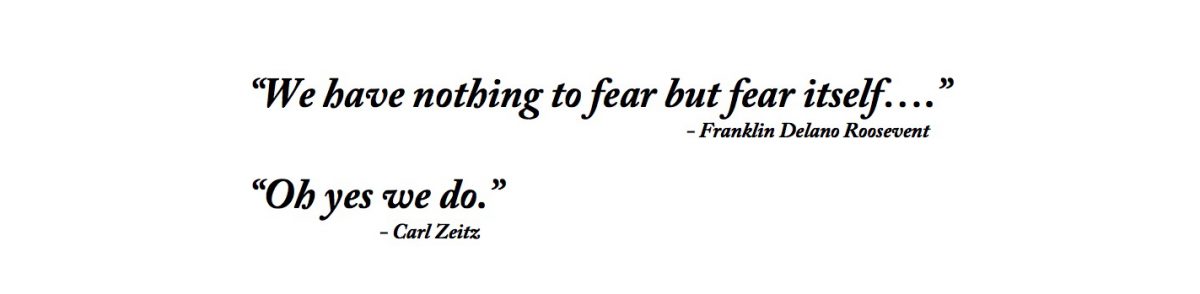
This is what — and this is all — the U.S. Constitution says about what constitutes an impeachable offense. It is Article II, Section 4.
“The President, Vice President and all civil Officers of the United States, shall be removed from Office on Impeachment for, and Conviction of, Treason, Bribery, or other high Crimes and Misdemeanors.”
It is set out at the very end of Article II, which otherwise establishes the presidency, the executive branch.
Article I of course lays out the powers and duties of the legislative branch. The national legislature, the Congress, composed of the House of Representatives and the Senate, got Article I because in the world of the “founding fathers” (there were founding mothers by the way, like Abigail Adams): Ok back to the point:
Because in the world of those founders the legislature in the prior forms they’d know and knew — the English parliament; colonial assemblies like the House of Burgesses in Virginia; the Continental Congress that governed the loose alliance of the states during the American Revolution; then the weak congress under the Articles of Confederation; and, if you think about and understand its lack of legal legitimacy, the Constitutional Convention, itself a legislative expression — to them, to the founders, the legislature was the first, the supreme and purist form of democracy and democratic government.
It was in their minds the first expression of “We the People…” and so its form and powers, including the power to impeach and the method for doing that and for trying an impeachment are set out in Article I.
The presidency got defined in Article II, literally as secondary to the national legislature because the founders only experience of that, of executive power, had been the kind they’d rebelled against: A king not to be tampered or bargained with or defied — until finally they did, risking ‘their lives, their fortunes and their sacred honor’.
It is one reason they set up a safety valve, a means of removing an offending chief executive or other federal officers in any of the three branches by means of impeachment.
In pure fact they really didn’t like and deeply mistrusted the idea of a chief executive. They truly disdained and mistrusted the notion and expected any chief executive to be ready to yield, to be supine before “We the People” as represented by and in the House and Senate. They feared an executive would one day overstep and trample on the people’s rights and the people’s elected Congress.
Well, even founding fathers get a lot of things wrong, especially in a document that at its root and branch can be viewed either as a compromise with or a complete sell-out to slavery and the slave power that then, and for the next 74 years, held the nation hostage.
The judiciary got defined, explained, outlined and created in Article III because — to the founders — the courts were a lesser expression of government. Courts in their view functioned to settle disputes about land, money and other property, definitely including slaves, people held as property.
These where not the most enlightened of men after all. Over one-third of the 39 men who signed the Constitution and sent it on for ratification by the states, owned slaves. Only in Vermont, then an independent Republic that did not join the union until 1791, had slavery been entirely prohibited. Five of the 13 original states (Ga., S.C., N.C., Va., Md.) were unrepentant slave states while four (Ga., S.C., N.C. and Va.) were among the 11 that rebelled in 1861 against the United States in their fight to preserve slavery.
The original apportionment of the Congress, the rule counting slaves as 3/5th of a person for purposes of census enumeration and congressional apportionment; the grant of equal and thus vastly disproportional representation to each state in the Senate rather than proportional representation as in the House, especially now with its effect on the Electoral College (never mind the then immoral and disreputable 3/5th rule) were terms forced into the Constitution by slavery, by slave states (and as to the Senate also by small states like mine, New Jersey).
The result? We are a most imperfect Republic and, when it comes to electing a president, we are in no way a democracy.
“We the People” did not elect Trump president. A deal with slaveholders in 1787 made him president. He may therefore be a legacy we peculiarly deserve because of the Electoral College, a continuing, lasting effect of the “peculiar institution.”
You know though that 1787 is 241 years ago and since then … well you get the point, including the fact that along the way Lincoln and 2 million Union soldiers, freed the slaves and — and notwithstanding Scalia, Gorsuch, Thomas and their shitty friends in the Federalist Society (a Koch creation), there is no such thing as “original intent” in so much as they want to imprint that doctrine on the Bill of Rights or the basic document.
James Madison is not available for an interview on “60 Minutes” so it’s actually completely impossible and impossibly arrogant for any Supreme Court justice to claim to know what his original intent was in setting out the first draft of the Bill of Rights; or what any founder’s intent was in any Article, Section, paragraph, sentence or clause of the Constitution and the first 10 Amendments subsequently incorporated by them and their generation of Americans. Yes, there are the Federalist Papers, and they are somewhat evidentiary as to the structure and purpose of the basic document. But they all came before the Bill of Rights.
If there were such a valid doctrine (original intent) precisely as to the main document then perhaps Uncle Clarence Thomas would get but 3/5ths of a vote on the Supreme Court.
But the world changes, the law changes and our understanding of the Constitution changes. We take steps forward. We take steps backward. We slip sideways.
Still, certain things in the Constitution are so clear that we can read them today exactly as they were written 241 years ago because, unlike the vaguer first 10 Amendments we call the Bill of Rights, the articles of the document that establish the form of government and its powers, duties and procedures are more precise, exact and clear.
For example, Article I empowers each house to make its own rules. This is why only the Senate can change the number of its votes needed to obtain cloture. It used to be 67. Now, as we know, it’s 60 — except when it isn’t under other rules — and there is nothing we can do to change that unless “We the People” amend the Constitution to change that number, limit the internal rule-making authority of the Congress or, entirely unlikely, elect 60 senators pledged to end cloture.
No friends, we do not want to open the Constitution to amendment, we do not want a second Constitutional Convention. Can you imagine what creatures like Pruitt, Pence, Kelly, Ryan, McConnell and Cotton, to name but a few, would do to and with the Constitution if they got the chance? Shudder and shudder again because, because in the abominable and terrifying ignorance of the American people they would control any such convention. No, best leave the imperfect as it is– imperfect — lest it be rendered a monstrous evil.
Now, all that being said, the above cited Article II, Section 4 is all the Constitution of the United States says concerning grounds for impeachment. Elsewhere it sets down the procedures and mechanisms that makes the House the grand jury and the Senate the trial jury if the House votes a bill of impeachment. But as to the grounds for impeachment this again is all it says at Article II, Section 4:
“The President, Vice President and all civil Officers of the United States, shall be removed from Office on Impeachment for, and Conviction of, Treason, Bribery, or other high Crimes and Misdemeanors.”
Paying Stephanie Clifford, A K A Stormy Daniels, to keep her mouth shut in the three weeks before the 2016 election about the fact that she says she had sexual intercourse once with Donald Trump certainly can be construed as bribery.
On the evening of May 3, 2018 in an interview with Lawrence O’Donnell on MSNBC, Ms. Clifford’s attorney, Michael Avenatti, said there is documentary evidence, including in materials seized by the FBI from Michael Cohen, of an urgent need communicated on behalf of then Republican candidate for president Donald J. Trump just weeks before the 2016 election to close a deal to pay her $130,000 to keep silent about the fact that in 2006 she had sexual intercourse with Trump.
And, really, it doesn’t matter whether it’s about sex together or eating cup cakes together. It matters that Ms. Clifford got paid $130,000 to keep quiet three weeks before the election about her night with Donald Trump 10 years before the election. She got a bribe, was paid a bribe, took a bribe to kept silent about it.
Sex or cup cakes, doesn’t matter; a bribe is a bribe, bribery is bribery.
Then we get to a mountain of evidence already public (never mind all the details Mr. Mueller has) concerning ex-officio, ex-parte negotiations by private parties allegedly promising to use, if they could obtain it through an American presidential election, the executive power of the Office of the President of the United States on behalf of a foreign nation (Russia); allegedly promising in the event of achieving that power to reduce economic sanctions against Russia and to make other concessions to Russia for whatever reason or reasons (including, but not necessarily limited to, the private business and perhaps intimate personal interests of and accommodations needed by candidate Trump).
The Constitution very precisely defines treason. At Article III, Section 3 it says in part:
“Treason against the United States, shall consist only in levying War against them, or in adhering to their Enemies, giving them Aid and Comfort…” (emphasis added and, yes, lawyers will argue on one side that the second definitional clause is dependent on the fact of the first; while others will argue it is solely and is meant to be understood only as a separate and distinct offense. The answer to that pretty plainly is the word “or. It does not say and thus. It says “or“).
You do not sanction friends. You sanction foes, enemies. Is the promise of relaxed sanctions not “Aid and Comfort”?
Referring again to the exact language as to grounds for impeachment and to the definition of impeachment wherein the critical applicable phrase at this moment appears to be “…or in adhering to their enemies, giving them Aid and Comfort”, it can be said that the special prosecutor and the Congress may already have before them evidence of bribery and treason — never mind needing to discover “… other High Crimes and Misdemeanors”.
Ironically, if Cohen’s seized materials contain the best documentary evidence of the second enumerated crime, bribery, the best witness for it is the man who lately proclaims himself the president’s lawyer, Rudolph Giuliani. Effectively he has not argued but testified on television that Trump caused money to be paid to bribe Ms. Clifford in the interest of influencing the 2016 United States election for president.
Sorry Trump voters but it comes down to this — and it is as clear as that “clear day when you can see forever”: The man you voted for and his surrogates, operating on his knowing behalf , could have committed both enumerated impeachable offenses while leaving a trail of evidence as wide, long and deep as the mighty Mississippi.
Remember when Khizr Kahn said to Donald Trump, “Let me ask you, have you even read the United States Constitution? I will gladly, I will gladly lend you my copy.”
It’s long past time Donald J. Trump took Khizr Kahn up on his offer. If he does, he should begin his reading of the Constitution with Section II, Article 4.
 Peeling the Onion
Thanks, Carl. Clear & helpful. But impeachment of Trump, it seems, depends entirely on Dems taking both house & senate, unless enough anti-Trump (or pro-Pence) Repubs could be won over. Meanwhile what is the procedure for impeachment of congresspersons? It would almost be better for Nunes to win reelection if he could be disgraced & impeached after 2018.
LikeLiked by 1 person
Alex, Thanks. Wasn’t written to say that it will happen, only to make a case that the elements are there. I would think though I don’t know that since the Constitution leaves it to each house to make its own rules that the House has rules for how it would go about impeaching one of its own.
LikeLike