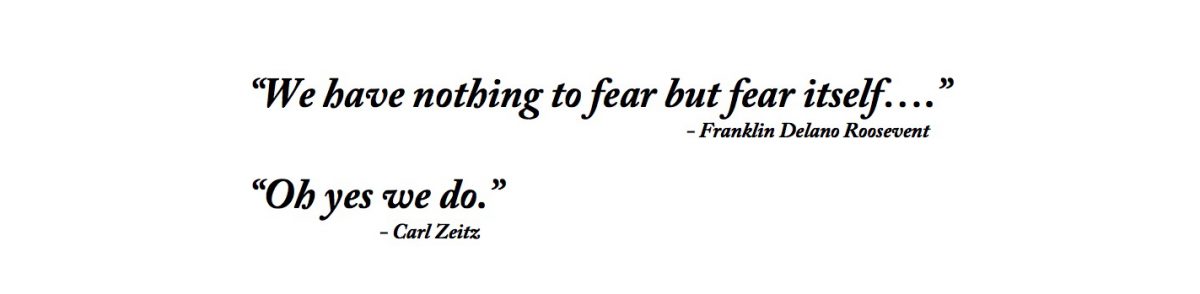
In 1906, the economy crashed. They called it a Panic. They used to call such events panics. At least since 1929 we have called them crashes, depressions, recessions. 1906 became one of the worst crashes ever in U.S history. Worse than 1837, worse than 1873. The worst until 1929 and then the one we lived through in panic in 2008 and the years after.
Who bailed out the U.S in the Panic of 1906? J. P. Morgan — in the context of his time the most powerful financier in the history of the U.S. and Wall Street.
Think of one man imbued by a multiple of the financial power of Goldman Sachs today. That would have been J.P. Morgan in 1906. More financial power held by one man than you can even or ever imagine. That was J.P. Morgan in 1906. Simple evidence of that wealth and the power it endowed him with? Visit the Morgan Museum in New York City and realize — realize that was Morgan’s home, one of them anyway.
At T.R.’s behest to Morgan and then at Morgan’s command, the then finance industry intervened in the Panic because there was no existing public agency — no central public bank with any influence over monetary policy and supply since Andrew Jackson killed the 2nd Bank of the United States — that could do it. No public agency that could rescue the economy by flooding it and the market with enough money to stop the downturn.
Morgan could command his peers in finance to do it and he did; and they did and the panic ended. But from that came a growing perception that it was time to establish a public agent to oversee and regulate monetary policy (the cost and supply of money), a consitutional reservation of the federal government; and thus keep it separate and reasonably safe from inevitable economic mismanagement caused by political interference in federal fiscal policy (revenue, spending, budgets, surpluses, deficits).
As a result the Federal Reserve Banking System (the Fed) was created by the Wilson administration in 1913 — becoming the historic successor to Alexander Hamilton’s First Bank of the United States and its more powerful successor, the Second Bank of the United States established under President James Madison (ironically the most influential opponent of Hamilton’s First Bank) — to control monetary supply and policy to protect the economy from the ravages of fiscal and financial excess.
For over 100 years, even during the Great Depression and especially during the past 50 years, the Fed has been very much sacrosanct — a space and agency as protected from political interference as is possible in a churning democracy.
Its greatest protection is that presidents of both parties have appointed competent economists to serve on the Fed Board of Governors and, notably, to the all-important position of Chair of the Fed Board and then kept hands off. Politically astute presidents understood that if the economy soured, the Fed gave them someone else to blame and take the blame.
Albeit Trump appointed not an economist but an attorney to be Fed chair, Chairman Jerome Powell has considerable background in finance and is a prudent man whose prudence has since drawn withering criticism and attack from the president who appointed him; when in fact presidents never comment on the activity and performance of the Fed unless the president is stupid or wicked, or both.
In a major way, the Fed politically is a relief valve for the White House when economic troubles arise. That’s a practical reason until now why presidents have kept hands off the wheel of the valve, not to mention that they know monetary policy is complicated, delicate and best not messed with by politicians because:
Because you could wind up politically dead if you mess with the Fed.
Congress could and has mucked up fiscal policy as it did two years ago with an unsustainable $1.5 trillion tax cut. But the Fed has stood and yet stands (though it teeters now on the cliff edge of White House interference) as a real world bulwark of practical economics against congressional fiscal fecundity and stupidity and congressional ignorance of the differences between fiscal and monetary policy and management.
That’s on the verge of being done now, undermining that assurance of an independent, reliable, politically insulated Fed.
Trump has chosen one man and is on the verge of choosing another for the Fed Board of Governors wholly unfit by experience, knowledge or moral soundness for the job.
The reported latest choice is Herman Caine, father of Godfather Pizza, one of those chain delivery companies like Domino and Little Caesar that serve up really shitty, thick, gelatinous dough topped with canned tomato sauce they then call pizza. Anyone from Rome (Italy not New York), New York City and, especially, New Jersey will tell you that ain’t pizza – it’s crap in a cardboard box.
Caine is an economic primitive, a fiscal idiot and monetary ignoramus who briefly ran for president in 2012 promoting what? Hard to say except he summed it up as 999, if you remember that idiocy and why would you? That he is a dope, a complete and utter jackass in every possible way in so much as he has ever been a public figure is a given (go to the videotape).
That Caine withdrew from the 2012 race in 2011, long before our current #MeToo era, when confronted by accusations of unwanted sexual advances is a fact. Small wonder he would be a choice of the admitted sexual violator in the White House.
Trump’s other choice for the Fed is Trump trumpet/apologist Stephen Moore, a character risen from the swamp of right-wing murk and mire, who owes federal taxes, alimony and child support and thus is (besides an intellectual dimwit and complete political whore) morally unfit. If you don’t support your own kids, Stephen Moore, should you really be making life and death monetary policy decisions for people who do?
Presidents of both parties are supposed to appoint and have appointed to the Fed experienced Ph.D.’s in economics with deep banking and regulatory experience, not deadbeat dads and pizza guys. They can be conservatives, they can be liberals but above all they should be qualified, deeply experienced and knowledgeably pedigreed Ph. D.’s in economics.
If you don’t think destroying the independence of the Fed by putting in jackass ignorant cronies with no knowledge or understanding of finance, economics and monetary policy, history and contemporary monetary issues is wrong — well good luck to you but what about the rest of us?
But whatever you think, know this: The impact, affect and consequent effects of incompetence and ideological mal/misfeasance on the Fed is not momentary. It is seriously monetary. It has and will have lasting effect and it won’t be good when, as is inevitable, there is another downturn, even severe downturn in the economy.
Don’t panic yet, but nincompoops like these at the Fed could be enough to turn a downturn into a real Panic.
 Peeling the Onion
Glad your back. Good observations.
LikeLike
Thanks, been intending to write. More on the way soon.
LikeLike