December 6, the day before Pearl Harbor Day, will be a milestone in the contest for the Democratic nomination for president. It’s the primary filing deadline for the California primary.
The California primary will be March 3 as will the Texas primary, for which the filing deadline is Dec. 9, along with primaries to elect delegates from 13 other states, American Samoa and Democrats Abroad. March 3 is the so-called Super Tuesday.
State of the Race
Every week now brings and will bring primary filing deadlines, deadlines for minor party filings and for independent candidacies for the November election.
But the seeming important primary dates right now, the ones the media keep harping on, Feb. 3, Iowa caucuses, Feb. 11, New Hampshire primary, Feb. 22, South Carolina primary and Feb. 29, Nevada primary — will be subsumed on Super Tuesday when 14 states, American Samoa and Delegates Abroad elect delegates.
A total of 168 delegates will be chosen in the four February contests, less than 0.5% of all delegates. Just a few days later, when all Super Tuesday votes are counted, Democrats will have chosen 40% of all elected, first-ballot delegates.
At that point, if there remain three to five viable candidates, if no one breaks through to capture at least 35% of all delegates elected, it begins to become mathematically difficult to achieve a first-ballot nomination.
By April 1, primaries and caucuses will have been held in 29 states and three more overseas U.S. jurisdictions bringing total elected delegates up to 66%. If no one is on a very clear path to a first-ballot nomination by then it could be nearly impossible and signal a multi-ballot convention.
The national political press still seems to believe or wants to believe a clear winner will emerge by March notwithstanding all evidence to the contrary.
To be nominated on the first ballot a candidate must win 50% plus 1 of 3,768 elected delegates — 1,885 delegates. To be nominated on a second or any subsequent ballot, when super-delegates can vote, would require 50% plus 1 of 4,532 delegates or 2,267 delegates. No candidate – no candidate — is yet on a first-ballot path.
The pundits continue to preach prevailing wisdom that Iowa will crystalize the contest, New Hampshire could be a knockout win if the Iowa winner wins again; and that if the candidate who does that is not Joe Biden then he has a black-voter firewall in South Carolina.
They can see the trees, one tree at a time. What the pundits so far cannot see is the forest of delegates to be selected from Feb. 3 to late June in 57 separate primaries and caucuses amid a tangle of rules that ensnare the nomination in a crowded field without a front runner in this oh so fraught Time of Trump to which we can add the ever more divisive morass of impeachment.
The contest lately lost two candidates who understood they were going nowhere but it also gained two prominent public men. Who dropped out? Wayne Messam, mayor of Mirama, Fla. who almost no one heard about unless perhaps they read this blog a year ago, and, storied Beto O’Rourke, who started with a flash but ended in the pan.
Dropping into the contest in November were former Massachusetts Gov. Deval Patrick, who decided not to run at the start of the year then changed his mind at the end of it; and former New York City Mayor Michael Bloomberg, a man reportedly worth $55 billion, ready to spend $1 billion to purchase the presidency. As if to prove that, in just 10 days Bloomberg made a nationwide $30 million TV buy, more than all the other candidates together spent the entire year on TV advertising.
Bloomberg, reputedly the third or fourth richest man in the United States, says he will not take contributions (other than from himself) and would not take the presidential salary if elected – decisions that spit in the face of democracy.
No matter how rich a president is, he should take the salary we pay if only to remind himself every day he works for the citizenry, they don’t work for him.
The Matter of Race in the Race
Why would? Why did Patrick and Bloomberg enter the race late? It has to be because they saw no one else commanding it or likely to. Their’s look like bets not to win the nomination outright but to earn a place to contend at a multi-ballot convention.
In Patrick’s case, in particular, the hinge for his decision may be a calculation based on the pivot on which the contest will turn and on which the November outcome will depend in large measure — the black vote, widely calculated now to favor Biden.
Just before Thanksgiving a Quinnipiac Poll, one of the reliable surveys, showed Biden with 43% support from black voters, nearly twice his overall 24% share in the survey with Sanders at 11% among black voters and no one else in double digits. That spells trouble for Democrats.
In 2016, 129 million voters cast ballots for Hillary Clinton or Donald Trump. Black voters cast 12% of all votes. Clinton won 92% of their votes. The catch for Clinton was the black vote dropped 1.1% from 2012, a difference of 1.3 million votes. Among several, this is a very glaring reason why she lost.
Take Wisconsin: Trump won the state by 23,000 votes in 2016 as statewide voter turnout dropped 3% from 2012. But in Milwaukee County, the seat of the largest black population in Wisconsin, turnout slid 10%.
If the black voter falloff in Milwaukee had mirrored the statewide drop, Clinton would have won Wisconsin as Obama did; ditto Pennsylvania, ditto Michigan. But here’s the rub, from the convention to the end of the campaign Clinton did not campaign once in Wisconsin. Not once.
Whether a Democrat can be nominated without being first or even second choice of black Democrats, it is absolutely certain a Democrat cannot win the White House without a seismic vote from black Americans.
Similarly, Hillary Clinton won an estimated 66% of the Latino/Latina vote in 2016. Given Trump’s record on immigration, DACA, and incitement of race and ethnic prejudice that percentage is ripe to increase for the 2020 Democratic candidate.
But first and foremost, the key Democratic constituency in presidential elections is black voters, 23% of the Democratic presidential selectorate, and therein lies the rub for the present field.
Biden, clearly, is favored by the black constituency now at least as that is demonstrated by polling in South Carolina, where over 60 percent of Democratic voters are black. Nationally he captures over 40% of black voters in polls but no better than 20% of white Democratic voters in polls.
Buttigieg, as has been apparent from the start, has no purchase with black Democrats significant problems gaining their support and yes, there is a bias involved. Black Americans are perceived as liberal because they vote for Democrats who emphasize and support their concern for civil and economic rights. But historically and in polling, they take a more conservative view than white Democrats on social issues like being gay, gay marriage and abortion.
They vote for Democrats for many reasons but first and always because of civil and economic rights, with which Democrats have identified and been identified since FDR and the New Deal. Republicans, historically the party of black Americans from the time of Abraham Lincoln to the 1932 election, have become the anti-party for black Americans with a revealed, concerted program to restrict and reduce voting rights so hard-won by blacks and white liberal allies from both parties 50 and more years ago.
Race prejudice is the reason every state in the defeated Confederacy has changed from solidly Democratic to overwhelmingly Republican since the 1964 Civil Rights and the 1965 Voting Rights laws were enacted.
Bloomberg made his first moves by filing for the Alabama and Arkansas primaries. Next November Trump will crush the Democratic presidential candidate in those states. But in July Democrats from both will be at the convention with votes that count in the nominating contest with large black contingents in their delegations.
Another key social issue is how the law is enforced in the United States. It is enforced as it always has been, with a heavy dose of racial discrimination and determination.
If the south has its history of lynchings, the north has stop and frisk. The foremost proponent of that noxious practice was Michael Bloomberg. New York’s former mayor started his run for the White House with an apology for his repugnant, unconstitutional stop and frisk policy because he knows it was anathema to Democrats. It still is. It always will be.
No apology is good enough, none can be to black men and Latinos stopped and frisked literally hundreds of thousands of times in New York City during his time in city hall because of who they are and the color of their skin, not for anything they had done.
Therefore, Bloomberg could be the very worst choice for the Democratic Party — the one candidate who could keep black Democrats home in November 2020.
Can $500 million in TV advertising overcome his stop-and-frisk history?
Anyone who thinks so, staring with Bloomberg, is whistling Dixie.
Kamala Harris and Corey Booker are black Americans who continue to paddle at the bottom of the presidential puddle. Some recent reporting in the mainstream media finds black voters looking for more than identity. An element in their failure to ignite among black voters could be that given the privilege in which Harris and Booker were raised and have moved through life, black voters don’t find identity with them.
Amy Klobuchar is one of several white candidates from states where blacks constitute a minuscule part of the population, less than 5% in her Minnesota. She too, though lately gaining some traction as a moderate alternative to Biden, has yet to make a connection with black Democrats.
The same applies to Bernie Sanders from Vermont, 5% black, and Elizabeth Warren, Massachusettes, less than 10% black; while the entry of Patrick, Massachusett’s, first black governor, could diminish further her similar lack of appeal so far among black voters in her own state and beyond.
Unlike Bloomberg, Patrick is a well-off man but not a wealthy man able to pour his own money into the campaign. Entering late without Bloomberg’s resources to hire lots of expensive staff immediately, he jumped in with no money, no campaign structure or staff and no particular message. He is a good friend of President Obama but in no way the inspirational figure Obama is. Like others, he is betting on a Biden bust.
Then, does the fact that so far except for a 77-year old white man whose candidacy is flailing and failing, black voters are not attaching to any of the candidates signify something that bodes ill for the Democratic Party’s candidate in 2020?
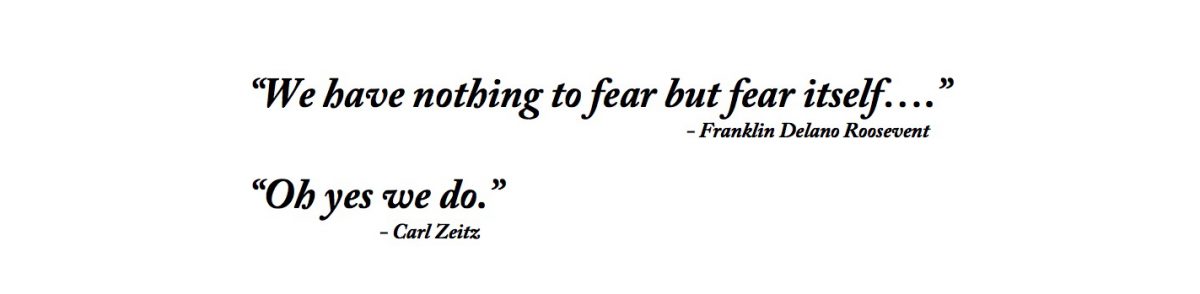
Oh Yes, definitely. In plainest terms, it suggests no matter who the candidate is he or she has to make sure the vice-presidential candidate will energize and galvanize black voters near to the level President Obama did.
Is there someone who can do that?
If there is, her name is Stacy Abrams.
State of the Race
What’s the state of the race? It’s looking for the next frontrunner.
Biden is back at the top in all the polls as the calendar turns to December. Buttigieg surged in the Fall but lately is back in single digits in 4th place as the focus on him exposed his problems with black and Latino/Latina voters and it began to dawn on folks that although he’s glib — very glib — Mayor Pete has hardly done a thing except be the now largely absent mayor of a small city in a state Democrats will lose to Trump.
Warren’s summer surge has been undone by a focus on her thicket of plans, notably by the fact that she had no explanation of how to finance “Medicare for All”. She came up with one but it doesn’t wash. Sanders, the oldest candidate, has moved back up past Warren again in the latest polls and the rest of the field continues to lag in place.
As the contest advances, Biden, Sanders, Warren and now Bloomberg are not getting any younger, bringing into sharper focus whether the nation’s answer is another 70-plus-year-old in the White House – especially someone who would be past 80 years seeking reelection in 2024 if he doesn’t up and die first, which 80-year-olds do every day. The only word for that prospect is stupid. If it will be stupid in 2024, then it is just as stupid now to set it in motion.
The polls in Iowa and New Hampshire on which the media fixates, show this one day and that the next. Given that four candidates, Biden, Sanders, Warren, and Buttigieg are in or around double-digits it is well to remember there is a 15% proportionality rule in delegate awards from voting.
If anything is striking in the polls it is that between them Andrew Yang, the $1000-a- month-in-every- pot man and Tulsi Gabbard, the woman Hillary hates, are polling up to 10% between them in New Hampshire. The best one can say about what that says about American voters is no wonder Trump is in the White House.
Lest we forget, two prominent Democrats have not made a debate stage since the summer, Gov. Steve Bullock of Montana and Sen. Michael Bennet of Colorado. Democrats should be asking why foolish people like Gabard and Yang are in the debates and these two men, who have won statewide in red and purple states and who have a lot to say have not been allowed onto the stage.
Speaking of debates. The first one in June drew 24 million viewers. The November debate had 7 million. The next one is in December for which so far six candidates have qualified. But then these are not really debates, especially the recent one in November when the panel of questioners cut off almost every interchange between candidates. They are mass interviews that seem to make less and less of an impression.
There will be another in late January, just before voting starts. If nowhere else, it should get big audiences in Iowa and New Hampshire.
Meantime Happy Thanksgiving and Happy Holiday to all the candidates. They’ll need to enjoy them because it won’t be much fun for them once they end.
 Peeling the Onion
Happy Thanksgiving, Carl.
My dream ticket is Sherrod Brown and Stacy Abrams…..I am not sure why he decided not to run.
LikeLike
Happy Thanksgiving to you both. That would be my ticket too. It could happen if the convention deadlocked, perhaps wishful thinking but not entirely out of the realm of possibility.
LikeLike
Hi Carl. Yes I agree with you & Jim that Brown/Abrams would be a strong ticket, but pretty much anybody plus Abrams would be good. I started out as an emotional Bernie supporter but a pragmatic Klobuchar/Castro supporter. Then I began to think that maybe Warren could pull it off. After the badly handled Medicare-for-all mess I decided Warren was out, & reverted to Klobuchar. Then I took the NYT quiz pairing you with candidates on the issues and astonishingly came out closest to Yang! Yang/Abrams could conceivably defeat Trump. The 1k/mo is probably just an election gimmick because he must know that the likelihood of congressional enactment is very small. Or could Bernie/Abrams resurrect Obama’s coalition of youth + blacks? Happy Thanksgiving.
LikeLike
Hi Alex, Happy Thanksgiving and thanks for reading the piece. As long as the top 4 stay in and as long as they win delegates and as long as one or two more like Klobuchar, maybe Harris, Bloomberg because he can, win a few and persist, the more likely it becomes that it goes to the convention. Just heard, at last, someone say that on an MSNBC panel yesterday. As to Yang, well what a ying, you can tell my opinion of him from the piece. I doubt any ticket with Bernie or Warren on it can win. Going to be one mess of a year, as if we needed another one.
LikeLike