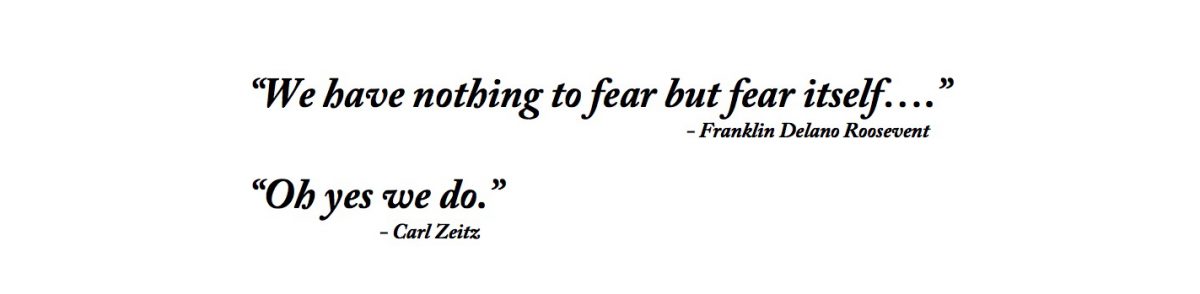
The reason our country is broken irreparably is the electoral college, equal state representation in the Senate, the rules of the Senate, and the unlimited terms of members of the Supreme Court.
These things are all in the Constitution. They have broken the nation.
The United States can’t be repaired unless the Constitution is repaired and that simply cannot happen in such a bitterly divided, angry nation as we have become.
The root of it all is in two intertwined deals made by the men who wrote our vaunted Constitition.
On May 25, 1787 delegates from 12 of the original 13 states met in Philadelphia to decide how, if they could, to fix the Articles of Confederation, the weak document that theretofore structured the nominal notion of a unitary nation, a United States of America.
The delegates quickly decided to abandon that project to write a new national charter, a constitution. In all 55 white men served as delegates to the convention of whom 39 signed the document on Sept. 17 that year, and sent it the states for ratification. The Constitution itself required that at least nine of the 13 states consent before it could take effect.
Among the 39 signers, 17 owned slaves a reflection from 11 years earlier in Philadelphia when 56 signers of the Declaration of Independence included 25 slave owners or former slave owners. Among those were former slave owner Benjamin Franklin and plantation slave lord Thomas Jefferson, principal author of the Declaration, who wrote its ringing announcement that “All men are created equal…”
The first state to ratify the Constitution was Delaware in November 1787, the ninth was New Hampshire in June 1788, thereby installing it as the law of the land. Several states, including New York, Virginia and North Carolina objected that the Constitution did not set out the rights of “We the people…” for whom it spoke in the very first words of its preamble.
Their objection would be satisfied in 1790 when the First Congress adopted and the states ratified the first 10 amendments – the Bill of Rights.
The only state not to attend the convention was smallest in territory and population, Rhode Island. The Ocean State liked its latitude under the loosely binding Articles and believed that to enter a strong federal scheme would leave it at the mercy of large states.
The Rhode Island objection turned on one of the two great differences that threatened to undo the constitutional project.
Those divisions were between large and small states over representation in a national legislature; and disgreement over slavery and what to do about it.
The First Deal
The Constitution directed a census within three years of seating the first Congress elected under it and then every ten years thereafter, the decennial census we know.
Which were the large states, which the small, looking only at their free white populations, both men and woman, as so categorized in the 1790 census? It reported population in the 13 states, as well as in Kentucky, Vermont, Maine (none were yet states and Maine remained part of Massachsettes until 1820 when it gained statehood) and territory in the “southwest” – today the southeast.
The 1790 Census counted 1.62 million “free” white men and boys; 1.55 million “free” white females; 59,511 called “all other free persons”, and 701,098 slaves, the Black people, who constituted nearly 18% of total population of 3.96 million. (Homage to Wikipedia, source for 1790 census information).
“All other free persons” meant Indians living outside their tribes but mostly it included indentured white servants. The Constitution terms Indians living in tribes as “Indians not taxed” and so by exception it directed they not be counted in the U.S. population.
The largest white populations, with numbers over 300,000 each, were in Massachusettes (including Maine), New York, North Carolina, Pennsylvania, and Virginia.
The largest slave populations were in: Virginia, 292,627, South Carolina, 107,094, Maryland, 103,036 and North Carolina, 100,572. Together those four states held 86% of all slaves.
In 1790, only Massacusettes counted no slaves because it had already abolished the abominable practice. The impact of these massive slave populations would result in a second compromise (see below) that gave slave states control of Congress for generations.
But first the delegates had to resolve the small state/big state impasse concerning congressional representation that seemed on the verge of ending the convention wihout result.
On July 17, 1787 they broke the first impasse when by the narrowest margin, a 5-4 vote, they approved what is called the Connecticut Compromise because Connecticut Delegate Roger Sherman proposed it. Note that it did not require a super-majority like the modern filibuster.
The filibuster derives from Article I, Seciton 5, paragraph 2, which says, “Each House may determine the Rules of its proceedings…” The super-majority filibuster is a Senate rule. It is neither written or so much as implied in Article I of the Constitution, the legislative article.
The convention required but a simple majority to resolve this core element of the Constitution, legislative representation and apportionment.
The 5-to-4 deal called for a lower house of the national legislature apportioned by population, a House of Representatives (subject to the pro-slavery three-fifths clause, see below), and an upper house, a Senate, in which each state would get two votes.
Under the Articles of Confederation each state had one vote in a one-chamber Congress. In the proposed two-house Congress each would have two members in the Senate. But rather than cast their votes as one unit for the state, each senator would have one vote with every vote thus carrying the same weight without regard to weighted popular representation as in the House.
It was, it is a deal that reverberates through history. It undermined democracy then as it does now in a nation increased from 3.96 million to 340 million people, in which the inequality of representation inherent in the scheme is a grotesque artifact thwarting democracy.
It also distorts and distends the other gigantically undemocratic mechanism in the Constitution that undermines the will of the majority, the Electoral College, because it awards a full electoral vote for each senator. Wyoming, with 590,000 people, gets two electoral votes equal to two of those representing California’s 39 million people. Two of Wyoming’s three electoral votes thus outweight two of Calforinia’s 55 electoral votes by a factor of 66-to-1.
The Second Deal
Then there is the other deal, a truly malignant one.
Article V of the document is devoted exclusively to how to amend it. To propose an amendment requires approval by two-thirds of each house of Congress, or by petition joined by two-thirds of the states to convene a convention to propose amendments.
Then to ratify a proposed amendment requires approval by three-fourths of the states, either by their legislatures or by three-fourths of conventions convened by them, either way but not by a combination of the two. Today, 39 states would have to say yes to ratify an amendment.
However, Article V makes two exceptions to the amendement process. One bars any change in each state’s equal Senate representation without the consent of that state.
The other says that under no circumstances could the following language in Article I, Section 9, be amended before 1808, the year it says importation of slaves must end. There was to be no amendment that “…shall in any Manner affect the first and fourth Clauses in the Ninth Section of the first Article…”
Article I, Section 9, first clause (paragraph):
“The Migration or Importation of such persons as any of the States now exisiting shall think proper to admit, shall not be prohibited by the Congress prior to the Year one thousand eight hundred and eight, but a Tax or duty may be imposed on such importation, not exceeding ten dollars for each Person.”
Such persons? What persons?
Black persons captured in and shipped from Africa to become slaves in bondage to white Americans.
Article I, Section 9, fourth Clause (paragraph):
“No Capitation, or other direct, Tax shall be laid, unless in proportion to the Census or enumeration herein directed to be taken.”
Together the two Article I, Section 9 clauses, clauses the Constitution did not permit ever be amended, set out that slaves could be imported until 1808 but that if they were the federal government could tax them at up to $10 a head just as it could tax an imported barrel of rum, bolt of cloth, or iron plow.
So, if Congress passed any head tax or other direct tax on the people then as far as slaves were concerned, the tax burden they created per slave for their owners would be in the same proportion as their weight in a national census as set out in Article I, Section 2, third clause (paragraph).
And, what does that say? It declares:
“Representatives and direct Taxes shall be apportioned among the several States which may be included within this Union, according to their respective Numbers, which shall be determined by adding to the whole Number of free Persons, including those bound to Service for a Term of Years, and excluding Indians not taxed, three fifths of all other Persons. The actual Enumeration shall be made within three Years after the first Meeting of the Congress of the United States, and within every subsequent Term of ten Years, in such Manner as they shall by Law direct.”
What does all that mean? It orders a census in three years, 1790 to be exact, and then every ten years after that.
It further orders that everyone is to be counted – counting every white person, indentured white servants, and Indians living outside tribes as one whole person, with “all other Persons” to be counted not as a whole person, but as three-fifths of a person each. Tribal Indians? They didn’t count and didn’t get counted. Free blacks? Never mentioned.
Who were “all other persons”? They were 701,000 slaves, almost 600,000 of whom lived in just four states, Virginia, Maryland, South Carolina and North Carolina.
That meant in the first national Census and every one afterward, if the Congress created by the Constitution passed and the president signed into law a federal tax per person as permitted under Article I, Section 9, then slaves would count only as three fifths. Why?
To assure their owners would pay less because, after all, a slave is worth money but has no money to pay a tax. That would fall on the slave owner to pay. But slave owners got a corresponding benefit by having their slaves counted toward their state’s representation in the House of Representatives.
Ok then, so far we have a Constitution that says until 1808 you can capture free black people, bring them in chains to our new democracy to sell, work and breed like cattle but you might have to pay up to $10 per head duty to import them.
And then, when we count the population if we set a tax on each and every person if you own a black man, woman or child, you pay less than for a white person – you pay three-fifths of that per head. But then on the plus side for you the slave owner, each slave counts as three-fifths of a person for your democratic representation that of course does not represent them because – because they are not people – they are property.
Example: If Virginia’s Mr. Jefferson owned 100 slaves (he owned many more than that) he would have to pay any per capita tax on only 60 of them and they would be counted as 60 people toward Virginia’s delegation proportion in the House.
Good deal right? Americans always love a good tax break with sweeteners.
But what if one of those black people ran away, like to Vermont or Massachusetts, which had already outlawed slavery by 1787, states where they could live as free men and women?
The Constitution had a ready answer for that. It says at Article IV, Section 2, third Clause (paragraph):
“No Person held to Service or Labour in one State, under the Laws thereof, escaping into another, shall, in Consequence of any Law or Regulation therein, be discharged from such Service or Labour, but shall be delivered up on Claim of the Party to whom such Service or Labour may be due.”
What did that mean? It meant a slave who escaped to a free state or federal territory where slavery was not enforced could be captured and dragged back to his or her master or mistress to wear the chains and feel the whip of bondage on his or her back. As the decades passed and more and more slaves escaped to the north, bounty hunting fugitve slaves became big business.
Without all these special gifts to slavery in the Constitution, Maryland, Virginia, North Carolina, South Carolina, and Georgia would never – never have ratified the Constitution. They made that very clear and that is why the document’s origin remains soiled, among other things, by slavery. Even, New York with the largest slave population in the North, more than 21,000 in 1790, might not have ratified it without the slavery deal.
Later amendments revoked all of the provisions that pertain to slavery but they did not erase the language. Even now it remains in the Constitution, an ever present Constitutional reminder of America’s original sin.
Thus, was it the “original intent” of the Founding Fathers that the United States would continue to be a slave nation? Yes.
So, Here’s the Deal
Taken together the two compromises, the Connecticut Compromise and the Slave Compromise demonstrate there was nothing noble about the writing and adoption of the Constitution.
It was, from the get-go founded on sordid deals with the slave power. The deals compromised and yet compromise democracy. Like all political deals, they were messy, unpleasant, reeking of favor, self-serving, and serving privilege at the moment of their making by the pols we call the Founding Fathers.
The Constitution is not sacrosanct. It is not eternal truth. It is not revealed truth or unchanging for all time, at least until in our time when to open it to change is both unimagineable and fraught with peril.
Certainly, it is not original truth. There is none in government and politics.
It was a deal between men – only white men, privileged men who were New England merchants, Middle-state bankers, farmers and tradesman, and southern plantation owners, with more than a few lawyers.
The Constitution is a detailed set of instructions to assemble and use a new government and to allocate a broad array of responsibilities and powers between the parts of the government it creates. It sets certain limits on each part while setting out those powers reserved solely to the states that comprise the nation to be governed by the plan.
Least of all is it a document that binds us to the year in which it was written and ratified, 1787. Least of all does it demand the peculiar, self-serving nonsense called originalism that would freeze common sense, knowledge, experience and all possibility in 1787, 235 years ago.
It was written in the exigent moment when a new nation was tearing apart at the frayed seams of its former colonial boundaries and splintering into 13 different countries. It stitched them back together.
The Constitution’s writers and ratifiers were practical men, political men – politicians- looking for practical solutions to their practical problem of creating a firm but not unchangeable framework for a unitary nation.
They had seen their entire world change in the space of 20 years. They had gone from protesting English taxation levied on them to repay the English Crown for protecting them and Crown trade against the French and Huron Indians, to rebellion, on to full scale revolution and nationhood. They began that adventure as Englishmen. They finished it as Americans.
In their lifetimes their world had already changed beyond their wildest imanginations and expectations. They knew when they wrote the Constitution that nothing is writ in stone, is writ forever. They had changed their world, who was to say it would not, should not keep on changing?
There is nothing so original as to be forever, as to be beyond change, Darwin proved that when he showed the world it was not created in seven days.
Indeed, the great oginality of the United States lies in its being a place born of change, and ever changing to fit and suit the times and progress in which it finds itself.
In all of that change, the one direction it has never travelled is back in time, at least not until now: Now, when it finds itself in the hands of a Supreme Court on which the majority cannot see what’s ahead, seeing only darkly and mistakenly what lies far behind us all and calling it “Originalism.”
But Originalism is to law and constitutional understanding as Creationism is to the origins of nature and life. Each is a brittle, backward, deceit with orginialism being a truly bad deal made up out of wholecloth that undermines our future as a constitional nation.
 Peeling the Onion
You are so right, as usual. How irrational is it that these “Originalists” claim to interpret the Constitution by channeling the attitudes of the founders when those attitudes, while progressive for their time, were odious for our time. And how ironic is it that the Constitution was only made possible because the founders’ willingness to compromise their views in their time in order to accommodate the needs for good governance – the compromise over slavery the most obvious – and yet the “Originalists” refuse to compromise their views in our time in order to accommodate our needs. We’re in trouble.
LikeLike
Thanks much. Tom Paine had it right, “These are the times that try men’s souls.” They sure are. Hypothetically, what would Al L. think of this? Which goes to your last note to me last week, which I meant to answer.
LikeLike