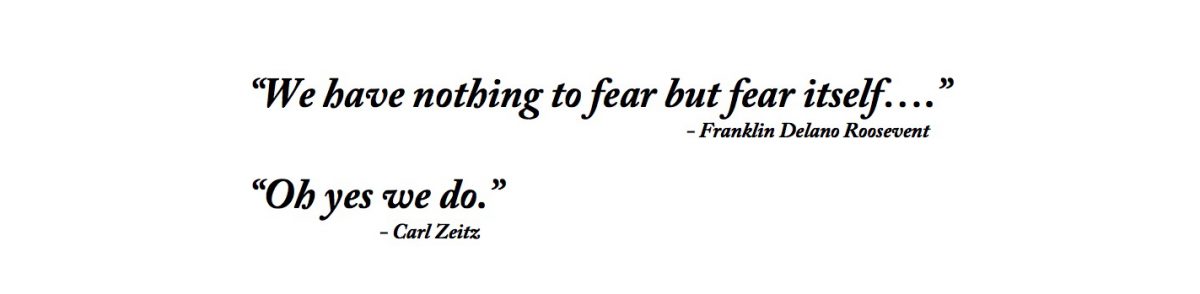
We know the flow up to now. Last winter and spring a Democratic debacle loomed.
Then came the Dobbs decision (expect everyone knows but if any don’t that’s the ruling by the Supreme Court last June on abortion).
That led to a wave of pro-choice protest, Democratic resurgence, a changed political landscape reflected in at least two primary elections, one in the Hudson Valley in New York where a Democrat narrowly won a seat a Republican had been expected to win with his victory attributed to Dobbs backlash.
The other election was in Kansas where, with a 59% majority in a very conservative Republican state, voters chose choice, voting to keep the underlying right to an abortion in their State Constitution. The result was deemed possible but the size and demographic scope of the majority was stunning. Yet, even as if to provoke the pro-choice vote, Republican legislatures in a dozen states began one-upping each another with draconian anti-abortion laws.
On June 14 the price of gasoline, rising steadily through the spring peaked at a national average of $5.01. That is a national 50-state average, not the price at every pump in the country.
Then in part prompted by a release of 100 million barrels from the national strategic oil reserved directed by President Biden and by other factors, pump prices began to fall. Day by day they dropped a penny a gallon, two cents a gallon, maybe a half-cent a gallon until in late September the average stood at $3.676 per gallon.
If there is a benhmark against which to measure these fluctuations in gasoline prices it would be the $3.37 a gallon national average one year ago when few were complaining about the price.
In Washington the Democrats with scant or no Republican help in Congress and plenty of opposition from them, enacted laws to invest in infrastructure, act on climate change, reduce drug prices, and invest in domestic research and manufacturing of chips – not the chocolate ones but the computer chips that now make everything work from can openers to computers to cars, airplanes and space ships and are the building blocks of all future technology.
Hardly anyone noticed. They were busy noticing the price of gasoline.
In the period between June and late September, with prices at the pump receding,including in most of the so-called battleground states, and with the force of the Dobbs decision channeling Democrats’ energy and engagement, Democrats began to rise in the polls.
Some of them jumped out to significant leads over their Republican opponents or put enough distance between them as to signal much better chances as Republican primaries regugurgitated extremist candidates onto November ballots.
Who was it who said, “Exreremism in defense of liberty is no vice”? Oh, yes, Barry Goldwater. Could even he have imagined Kari Lake and Bart Masters, the Republican candidates respectively for governor and U.S. senator in his Arizona? It’s what, these days, they call an existential question.
Now, of course the pundit is a herd animal. It has a talent for repeating the last thing it heard unless and until it hears something different.
So from June to September the pundits all remarked on improved Democratic chances but hedged always with reports on inflation. Then in late September the national average price of gasoline began to inch up topping out at $3.93 a gallon two weeks ago in early October. Also, two national reports showed inflation at 8.8% annually in September and 8.4 % in October.
The pundits did not note the rise, had been checked but that it continued to be high. They spokes as always with one voice. At any given moment the inflation rate reduces in the public mind to but one number – but it is a number about which millions and millions of words of doom are written and spoken.
They kept up the drumbeat though if they looked across the ocean they could see inflation rate ranges between 12% and 24% among European nations. But Americans don’t care about 24% inflation in Lithuania. They should But they don’t. They are much more interested in the bread aisle at the local supermarket.
Regardless, the revised take on the election was that inflation had moved to the fore again, heralded once more by rising gasoline prices and that Dobbs angst was receding.
But, then what happened to the price of gas? The national average began to fall back and has been falling a penny or two a day. As of this writing Friday, Oct. 21, it was back to $3.82 with every prospect of dropping back to its recent low.
Given the ups and downs in pump prices and the ebb and flow in the polls, you could surmise there is an inverse relation between the price of gasonline at the pump and the polls. Will falling gasoline prices make it back into the news with time for that to be reflected in public opinion – and polling – and then at the ballot box? Who knows. Certainly I don’t but chances are, time running out to Nov. 8, it will not.
Polls the past two weeks clearly show a shift no matter the quality of some Republican candidates. They are who and what they are and their races are in play notwithstanding – and notwithstanding that many have closed on their opponents or taken a lead.
This reflects a wave of purposefully hysterical but wickedly effective Republican advertising accusing Democrats of promoting, tolerating and just plain causing crime. That murderer in the house next door? No doubt a Democrat say the ads. What? Shades of Willy Horton? You bet. Shameful then, shameful now. Oh yes. But does it work? It works.
What to make of it all? Well but for one factor there is both evidence and a feeling that if you are a Democrat you will not be happy the morning of Nov. 9 or perhaps more likely two or three days later given the changes in how we vote and how much longer it takes to count early voting results.
Early voting is a combination of voting by mail or voting at polling places opened before Election Day. It varies from state to state but is underway now in almost 40 states.
What do we know about how that is going so far? Not much but what we do know is surprising, possibly telling, maybe not but interesting.
First though some context. In the 2014 mid-terms about 36% of all eligible American voters cast a ballot. In 2016, a presidential year, that rose toward 60%.
Then came the Trump mid-term in 2018. Turnout went to 49.5%, the highest mid-term percentage since 1914 (when only men could vote). That year, 113 million of us voted, just 18 million fewer than voted for president in 2016. It was reported that 40% voted early.
Two years later President Biden got 81 milion votes, Donald Trump received 74 million, 155 million between them as early voting surged to become the way we vote.
In 2020, only 27% of voters voted on Election Day. An equal number -27% -voted early at the polls and 45% voted early by mail. In other words by the time we got to Election Day two years ago, 73% of us had already voted.
And so what about this year? It is beginning to look, though the evidence is still limited but mounting daily, that the same is happening with early reports focused on two states, Georgia and Florida.
As of Oct. 21 a news report placed total nationwide early voting at 5 million though only a handful of states had started with others coming on line every day. That means over the first three days of early voting anywhere it was take place, 4.4% of the record 2018 turnout was in and 3.2% of the historic 2020 turnout had been achieved. Small percentages but perhaps portending another voting surge this year.
One could conclude if you make it easier for people to vote more will, which explains why the conservative U.S. Supreme Court has cut up the 1965 Voting Rights Act and why two dozen Republican legislatures have imposed new voting restrictions, notably in the old Jim Crow south, as in Georgia for instance.
It could be backfiring but then you can always say afterward there was fraud, it was stolen, they cheated, dead people voted, illegal people voted. You can say those things. They are not true as is demonstrated over and over and over but you can say them and create chaos and mistrust. Such fun.
In the 2018 midterm in Georgia, 70,000 voters cast a ballot on the first day of in-person early voting. In the 2020 presidential year 136,000 Georgians voted on the first day. On the first day this year, Oct. 17, 135,000 voted early and on the second day, 134,000 voted.
In Florida as of Oct. 18, the first day of early in person voting, more than 2 million votes had been recroded, over 1.8 million by mail and more than 185 000 in person at polling stations.
Both of those states have critical races for the U.S. Senate and governor and several House seats.
Are these reports aberrational? Do they reflect a trend we will see across the country? Are they one-offs? Do they presage an historic mid-term vote? Way too early to say that. Does it seem possible? Yes.
We know both anecdotally and from actual past voting records and patterns that more Democrats vote early than do Republicans, at least up to now. We know we are bitterly and intractably divided – that one voter’s truth is another’s fiction and the reverse.
So is everyone voting early, that is on both sides? Is it decidedly more by Democrats as in the past? Have Republicans increased their early voting?
Is it inflation and Republicans harping on crime, or is it Dobbs? Or is it all of that bringing out an early vote?
Then from all this where are the midterms headed? Seemingly moving clearly toward the Republicans in the polls and in the punditry, which always has a self-fulfilling, self-congratulatory element.
If the early evidence of a record mid-term turnout continues there could in fact be long nights and extra days of counting, watching and waiting for the result to become clear – to decide several State Houses and which party will control the U. S. Senate the next two years.
We can’t know for now, nor can the pollsters and pundits, what forces are underlying and driving a potential record voter turnout and in which direction it is moving. In the days ahead there will be further reports on early voting and some clarity as to who is voting in greater numbers. Look for clues in those reports.
Until we see those, and until the votes get counted, Republicans right now have more reason to think it is going their way and for the pundits to say it’s so.
But remember, pundits are herd animals. Sometimes they lose track of the scent.
 Peeling the Onion
Polls are just that – snapshots in time of what a group of respondents think on the topic in question. Pundits love polls. That’s their basic calorie intake so they can theoretically be heard with statistical authority.
They couldn’t have been more wrong in 2016. As ‘The Onion’ notes, it’s still too early to know the probable outcome of this election. However, the one question that’s worth tracking is various polls’ tallies on those who think the country’s heading in the right direction. Since April it’s consistently been around 25%. The corollary is obviously that three quarters of the respondents either don’t have an answer or feel we’re headed off course.
I’m not a pundit but that consistent response for more than six months tells me the Democrats are in big trouble. It is an underlying feeling that I believe carries much more weight than the price of gas or the ineffectiveness of both parties’ odious attack ads.
Of course the satisfaction numbers were pretty much the same in 2016. However , by March 2020 the numbers were essentially evenly divided so confidence in where we’re headed has gone back into a deep hole again pretty quickly.
Three weeks left before we know what emotions led us all to vote whichever way we did. It’ll be interesting.
LikeLike
Yes in all likelihood with Dobbs being the unlikely election shape-changer at this point.
LikeLike
Carl
Good piece. I responded with a comment.
<
div dir=”ltr”>Rather than immediate posting, the response said th
LikeLike
Great piece. Fingers, toes and other body parts crossed that early turnout means what it used to. If that happens, as you point out, though, the big worry is whether the expected fictional fraud claims of the Republican losers will take hold. And if that happens, well, we’ll have to learn the lyrics to “Oh, Canada.”
LikeLike
“Oh Canada, my home and mighty land”
Thanks
LikeLike